bondsalesteam

after the flood

What to Do After a Flood: Flooring Tips for Your Home

Spring is a wet season. In recent weeks, many parts of the country have experienced heavy rains, rising water levels, and unexpected flooding. When flooding happens, the damage can feel overwhelming both individually and as a community.

For homeowners, though, the impact isn’t measured in large numbers—it shows up in everyday decisions. What can be saved? What needs to be replaced? How do you dry out your home before bigger problems, like mold, begin?

One of the most important areas to assess after a flood is your flooring. Different materials respond to water in different ways, and knowing what to do can save you time, money, and frustration.

What to Do After a Flood: Start with Quick Action

Time matters when dealing with water damage. In many cases, you have about a 24-hour window to begin drying and treatment before mold and bacteria start to develop. Acting quickly can make the difference between saving and replacing your flooring.

Indoor Carpet After Flooding

If flooding is minimal and addressed quickly, indoor carpet may be salvageable. The biggest concern is not always the carpet itself, but the carpet pad underneath. Carpet padding absorbs a large amount of water and can quickly become a breeding ground for mold and bacteria. In most cases, the pad will need to be removed and replaced, even if the carpet can be saved. Professional drying and cleaning are strongly recommended.

Outdoor Carpet and Flood Damage

Outdoor carpet installed over concrete can often be cleaned and reused, especially if it is made from water-resistant materials like olefin. However, outdoor carpets made from natural fibers such as jute or sisal are much more likely to absorb water, develop mold, and deteriorate. These materials are less likely to recover after flooding.

Hardwood and Laminate Floors

Hardwood flooring is particularly sensitive to water. When exposed to moisture, wood can swell, warp, or buckle. If the damage is minor, hardwood floors may be sanded and refinished once they are completely dry. However, it is important to inspect the subfloor for hidden moisture or mold before moving forward.

Laminate flooring does not hold up well to water exposure. In most cases, laminate floors will need to be replaced after flooding.

Vinyl Flooring and Water Exposure

Vinyl flooring is more water-resistant than many other materials, but it is not immune to damage.

Watch for bubbling or lifting, which can indicate trapped moisture underneath. The subfloor should always be cleaned and treated to prevent mold growth. In some cases, individual luxury vinyl tiles (LVT) can be replaced without removing the entire floor.

Tile Flooring: The Most Water-Resistant Option

Ceramic and porcelain tile are among the most durable flooring options when it comes to water exposure. These materials absorb very little moisture and can usually be cleaned and retained after flooding. However, it is still important to inspect and clean the grout lines and subfloor to ensure no hidden moisture remains.

Make Careful Decisions After Flooding

Recovering from a flood involves many decisions, and flooring is one of the most important. Choosing what to save and what to replace can affect your home’s safety, comfort, and long-term condition. Act quickly, assess each type of flooring carefully, and when in doubt, consult professionals to avoid future issues like mold or structural damage.

If you need help repairing carpet edges, replacing damaged sections, or finishing new flooring after a flood, Bond Products is here to help. Call 1-888-800-BOND for guidance on the tools and supplies you need to restore your space.

What to Do After a Flood: Flooring Tips for Your Home Read More »
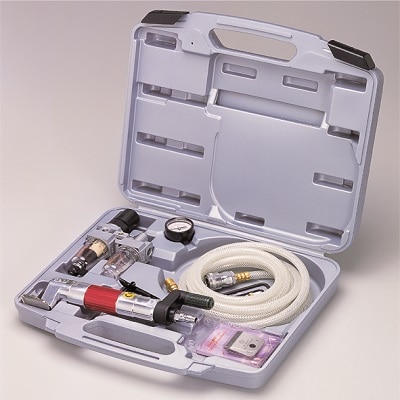
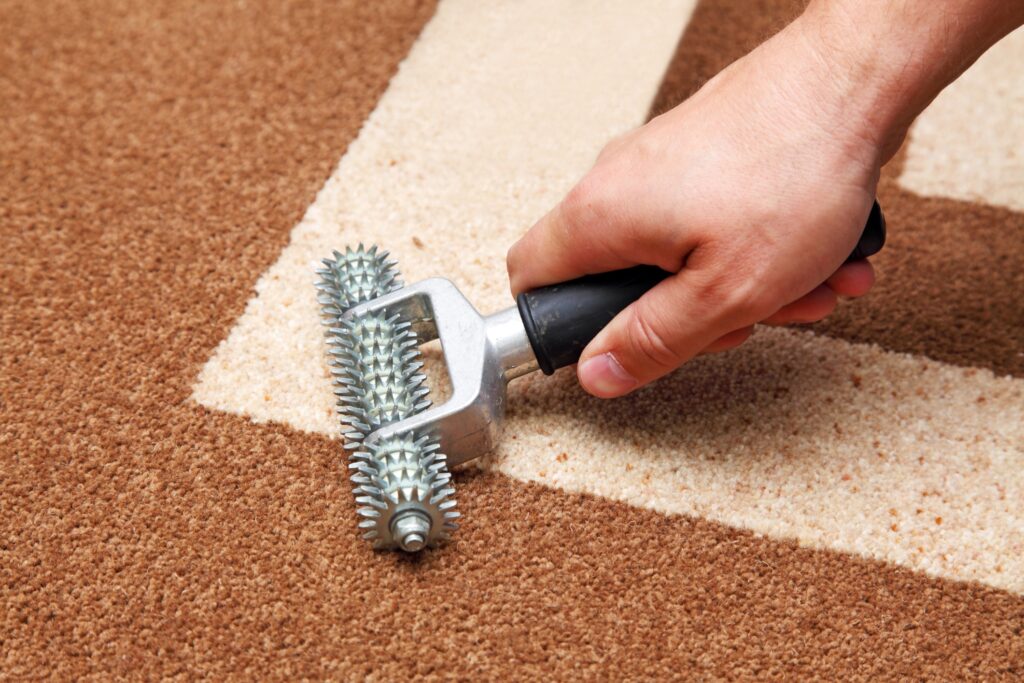
What is rug carving? Use our pneumatic air carver to carve designs into your own rug!

What Is Rug Carving? A Guide to Adding Texture and Design to Carpet

At Bond Products, our motto is, “Every hard floor needs a nice area rug.” But what exactly makes a rug “nice” can vary widely. Some people love antique rugs, while others prefer hooked rugs or modern designs. Not everyone has the budget for a high-end handmade rug, and that’s where creativity comes in.

Binding carpet remnants is one way to create a custom rug at a lower cost. Taking it a step further, rug carving can add an entirely new level of detail and beauty to a piece of carpet.

What Is Rug Carving?

Put simply, rug carving is the process of adding texture to carpet using a carving tool. It involves shearing or cutting into the carpet’s pile to create depth, definition, and contrast within the design.

By carving into the surface, you can form valleys, outlines, and highlights that bring patterns to life. This technique works especially well on custom rugs, logos, and decorative designs.

Here is a video we recorded demonstrating rug carving in action:

The Art of Customizing Rugs

Carpet is already a three-dimensional medium, but rug carving enhances that quality even further. It allows the designer to guide the viewer’s eye, emphasize certain elements, and even add new design features to an otherwise simple surface.

When done well, this is absolutely an art form. It combines technical skill with creativity, resulting in a finished piece that is both functional and visually striking.

Learn Rug Carving from the Experts

Bond Products has partnered with rug carving expert Tami Sullivan of Carpets By Design for over 25 years. Tami creates beautiful custom rugs and offers hands-on training for those interested in learning the craft.

Her training classes cover:

  • Carpet cutting and seaming
  • Carving and sculpting techniques
  • Rug backing and edge finishing
  • Design and pricing strategies
  • Marketing insights for building a business

Her next class is a 4-day, 30-hour hands-on workshop designed for beginners and professionals alike. Mention Bond Products when registering for her class and receive a $500 discount.

Tools for Rug Carving

Bond Products offers a full line of rug carving tools and accessories for both professionals and DIYers. Whether you’re creating custom rugs for clients or experimenting with your own designs, having the right tools makes all the difference.

Rug trends may change over time, but handcrafted details never go out of style. There’s something especially satisfying about creating a custom design with your own hands—and owning a rug that is truly one of a kind.

Learn a New Skill

Rug carving gives you the ability to:

  • Customize carpet designs
  • Add depth and texture
  • Turn simple carpet into decorative art
  • Create unique, high-value pieces

Whether you’re a professional looking to expand your services or a DIYer exploring a new skill, carving rugs offers both creative and practical rewards. Why not give it a try?

What Is Rug Carving? A Guide to Adding Texture and Design to Carpet Read More »

binder packaging

How to Ship a Carpet Binding Machine for Repair

If your business relies on carpet binding machines and related equipment, you already know how important it is to keep those machines running smoothly. When a binder breaks down, repairs need to happen quickly so you can get back to work. But before sending your equipment out for service, it’s important to know how to properly ship a carpet binding machine for repair so it arrives safely.

Bond Products repairs and services all brands of carpet binding machines, including portable binders, sergers, and tapestry binders. Every year during our spring and fall open houses, we demonstrate how these machines work and how they can be maintained. When professional repairs are needed, we’re always ready to help! One issue we frequently see is equipment arriving damaged because it was not packaged correctly for shipping.

Here are our recommended steps to ensure your binder arrives safely.

Use Strong, Durable Packaging

Start by selecting a new double-wall cardboard box rated at 200-pound test strength or higher. Carpet binding machines are heavy pieces of equipment, and standard boxes may not hold up during transit.

Inside the box, wrap the machine carefully and surround it with plenty of packing material. The goal is to keep the binder from shifting inside the box while it is being transported. If the machine moves during shipping, it can easily suffer damage.

Choose a Reliable Shipping Carrier

We recommend using UPS for shipping and also insuring your equipment in case it is damaged or lost en route. Do not take chances! Carpet binding equipment is expensive to replace, and we cannot be held responsible for equipment that goes missing on its way to us.

Include Contact Information and Repair Instructions

When shipping your binder for service, be sure to include your contact information and return shipping details inside the package. If you need an estimate before repairs are performed or would like to discuss trade-in options, include those instructions as well.

Ship your package to this address: 

Attn. Service Dept.

Bond Products, Inc.

4511 Wayne Ave.

Philadelphia, PA 19144

If you have questions before shipping, feel free to call us and we’ll gladly walk you through the process.

Inspect Your Machine After Repair

Once your repaired machine returns to your shop, take a few minutes to inspect both the packaging and the equipment itself. Confirm that no damage occurred during shipping.

It’s also a good idea to set up the machine and run a quick test using a small piece of carpet. This ensures the binder is operating properly and that the repair was successful.

Don’t Delay Needed Repairs

Running damaged equipment can slow production and cost your business money. If your carpet binder, serger, or other equipment needs service, send it to Bond Products with the proper packaging and instructions. Our team will repair it quickly so you can get back to work.

If you have questions about packaging or shipping your machine, call 1-888-800-BOND. We’ll be happy to help you get your equipment safely to our service department.

How to Ship a Carpet Binding Machine for Repair Read More »

carpet seam peaking

A Carpet Seaming Problem to Avoid: Seam Peaking

In a previous blog, we covered how to connect carpet seams with a step-by-step guide for anyone new to carpet installation. Here we’ll focus on a common carpet seaming mistake to avoid if you want your carpet to look right, last longer, and remain safe to walk on: seam peaking.

Poorly installed carpet seams can lead to visible defects, premature wear, and even tripping hazards. While other seam issues exist, like seam splitting, one of the most common and frustrating problems is seam peaking.

What Is Carpet Seam Peaking?

Seam peaking occurs when the carpet rises or tents up along the seam instead of lying flat on the floor. Rather than blending into the surrounding carpet, the seam becomes visible and uneven.

The seam rises due to tension created during stretching. As installers stretch the carpet, the backing absorbs that force until it reaches the seam. Seaming tape becomes the weakest point, so the tension pushes upward, causing the seam to peak.

How Excess Heat Causes Seam Peaking

Installers often cause seam peaking by using an iron that is set too hot. The excessive heat damages the carpet fibers and backing. Additionally, high temperatures may release the yarn twist, which leads to shading, discoloration, or peaking along the seam line.

Heat damage can also weaken the bond between the carpet and the seaming tape. Synthetic carpet backings are especially sensitive to heat. Applying too much heat can cause them to curl or lose stability, increasing the risk of seam failure.

Why Some Carpet Seams Peak after Installation

Even with proper preparation and quality seaming tape, some seams may still peak after installation. Carpet construction plays a role. Stiffer carpets with thicker or more rigid backings tend to peak more often than more flexible materials, especially when stretched aggressively.

Because seam peaking does not always appear immediately, installers should take preventative steps before completing the job. Careful seam preparation and testing set the foundation for a successful seam.

How to Prevent Carpet Seam Peaking

Applying seam sealer before seaming is one of the most effective ways to prevent problems. It keeps tension aligned along the carpet backing and reduces the risk of splitting or lifting during stretching.

Testing the seam before completing the full installation also helps. You can achieve this by seaming a scrap piece with hot melt tape and stretching it by hand over a flat surface. If peaking occurs, it will usually show up during this test.

Best Practices for Flat, Invisible Carpet Seams

A few practical adjustments during installation can make a noticeable difference. Installers can reduce seam peaking by following these proven techniques:

  • Back roll the carpet edges so the material relaxes and lies flat before seaming. This helps remove memory from being stored on a roll.
  • Pre stretch the carpet 16 to 18 inches on both sides of the seam to distribute tension evenly.
  • Use a lower heat setting on your iron or our Kool Glide iron when attaching seaming tape. Controlled heat protects the carpet backing and fibers.
  • Allow the seam to cool completely before stretching the carpet into place. Stretching too soon can weaken the bond.
  • Address cupping by seaming on a flat surface and placing a seam weight behind the heated area while it cools.
  • Choose wider seaming tape to better disperse tension across the seam and reduce stress concentration.

Taken together, these steps help seams lie flat, blend in, and hold up over time. The extra care during installation pays off in a cleaner finish and fewer callbacks.

Why Proper Carpet Seaming Matters

When carpet is installed correctly and with the proper care, the seams between the pieces should be nearly invisible. It will lay flat and no sections will be at risk of coming apart or unraveling. Seam peaking is both an unsightly problem and a potential safety risk. Please follow the above advice to make sure it doesn’t happen to a nice carpet near you.

And for the staples, staple guns, mallets, mallet caps, L-cleats, or finish nails you need for your flooring project, shop our Pro Drive HD™ line of supplies

A Carpet Seaming Problem to Avoid: Seam Peaking Read More »

how color matching works for your carpets and rugs

How Color Matching Works and Why It Matters for Carpet Binding

Putting together a great outfit, redecorating a living room, or selecting binding tape to match a carpet all rely on good color matching, even if it doesn’t seem obvious at first. While good color choices often feel intuitive, there is real science behind combinations that look balanced and intentional.

The stakes are higher when working with permanent materials like carpet. But once you understand a few basic color principles, you can make color matching easier and avoid costly mistakes. 

A Brief History of the Color Wheel

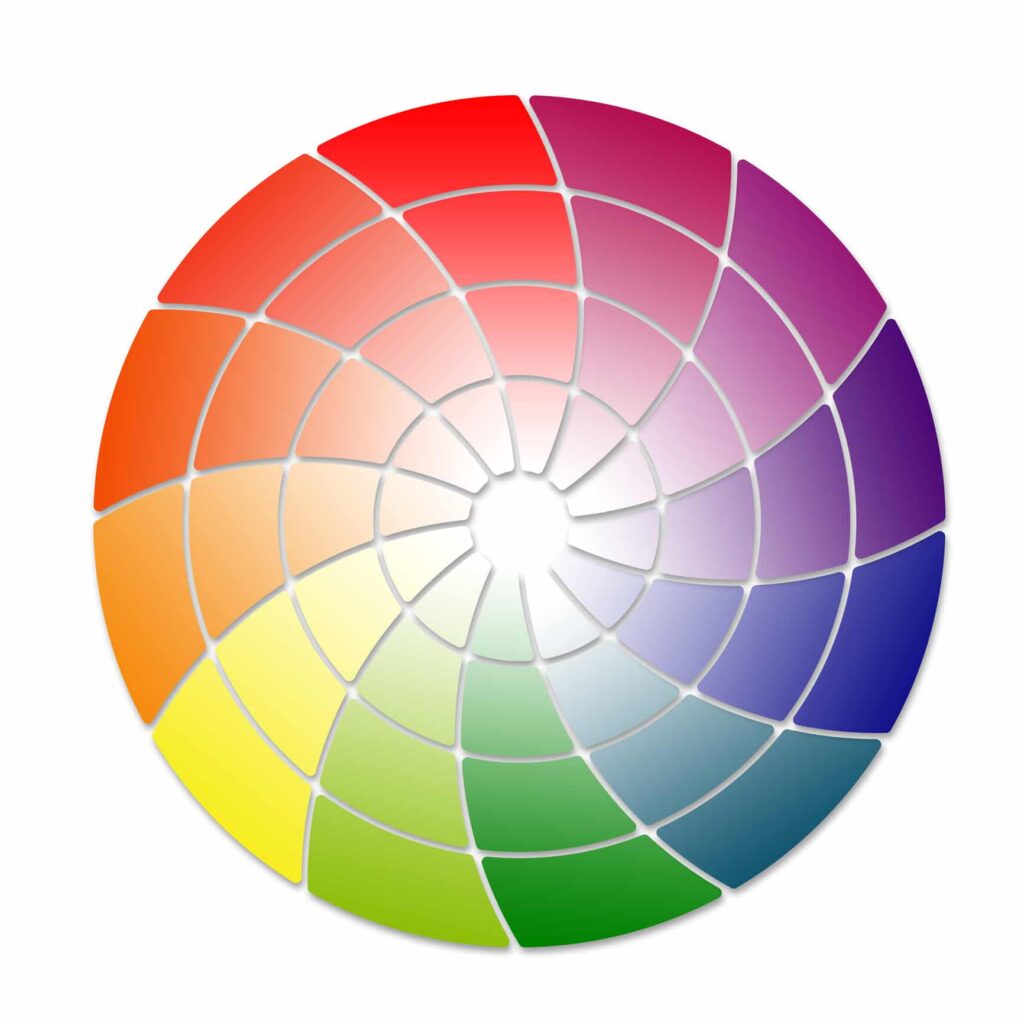
In the mid 1600s, Sir Isaac Newton passed white light through a prism and observed it separating into a spectrum of colors: red, orange, yellow, green, blue, indigo, and violet. He arranged these colors into a circular format based on how they appeared in the spectrum. While his theory linking colors to musical notes did not hold up, the color wheel itself did.

Understanding Primary, Secondary, and Tertiary Colors

The color wheel provides a simple framework for understanding how colors relate to one another. The modern color wheel breaks colors into three main groups.

  • Primary colors include red, blue, and yellow. These colors cannot be created by mixing other colors.
  • Secondary colors include green, purple, and orange. Mixing two primary colors creates each of these combinations.
  • Tertiary colors form when you combine a primary color with a secondary color, such as blue green or red orange.

Knowing where colors sit on the wheel helps explain why some combinations feel natural while others clash. It also makes the wheel a practical tool for everyday color matching decisions.

How to Create Pleasing Color Combinations

Several proven approaches make color matching more reliable.

Primary colors create bold, eye-catching combinations. When used together, they provide a strong contrast that feels energetic without being chaotic.

Complementary colors offer another dependable strategy. These colors sit directly opposite each other on the color wheel. Blue pairs well with orange, red works with green, and yellow complements purple. These combinations stand out while still feeling balanced.

Color families provide a more subtle option. Shades within the same family, such as navy, denim, and cornflower blue, work well together. If an exact match is not available and you want differences to go unnoticed, staying within the same color family usually solves the problem.

Why Neutral and Earth Tones Work So Well

Earth tones and neutrals play an important supporting role in color matching. Colors like white, cream, gray, and tan pair easily with most hues because they appear naturally as background colors in nature.These tones rarely draw attention to themselves, which makes them especially useful when an exact match is not possible. 

In carpet binding and trim applications, neutral colors often provide a clean, professional finish that does not compete with the carpet itself. They allow the carpet design to remain the focal point while still creating a finished edge.

Color Matching Is Harder When the Result Is Permanent

Some people develop a strong eye for color over time, while others find matching colors challenging no matter how much they practice. In clothing or décor, a mismatch is temporary. You can always change it later.

Carpet binding is different. Once installed, the choice becomes part of the finished product. A slight mismatch that felt acceptable at first can become obvious over time, especially in well lit spaces. That permanence makes careful color selection far more important.

How Lighting Affects Color Perception

Lighting conditions can dramatically affect how colors appear. Homes tend to use natural or warmer light, while commercial spaces rely more on fluorescent or mixed lighting. These differences can make the same color look noticeably different from one setting to the next.

Bond Products matches dyes under daylight conditions and uses a light box in the dye house to simulate different lighting environments. This process reveals how a single color can shift in tone depending on the light source. What looks like a perfect match under one type of light may appear noticeably different under another.

Why Color Cards Make Matching Easier

For this reason Bond Products offers a variety of color cards to our customers. We offer them for Instabind, carpet fringe, binding tape, serging yarn, and many other products. If you’d like to take the guessing out of color matching your binding tape to your carpet or rug, these cards are perfect.  Make your color selection process as seamless as possible, and order your color cards today.


How Color Matching Works and Why It Matters for Carpet Binding Read More »

area rug placement

Tips on Area Rug Placement

Bond Products’ motto has always been Every hard floor needs a nice area rug.” Rugs are the foundation of what we do, and our product line is built around maintaining, finishing, and improving all types of rugs. A well-chosen area rug can make a room feel complete, pulling together furniture, artwork, and architectural features like fireplaces or large windows into a unified whole. Once you’ve found the perfect rug, the next question is often just as important: where should you place it?

Rules for Best Area Rug Placement

Size

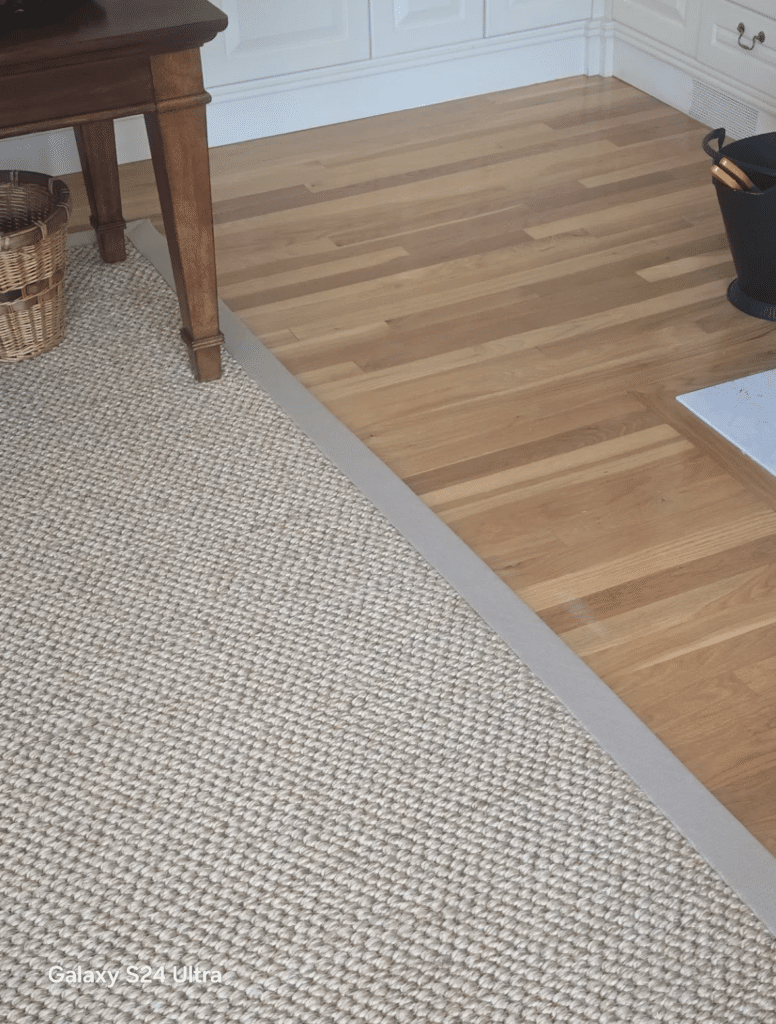
When it comes to area rug placement, a good rule of thumb is to leave at least eight inches of exposed floor between the edge of the rug and the walls. This guideline works best for rugs intended to anchor most of the room. In a 10-by-14-foot space, for example, a rug measuring 8-by-10 feet or slightly smaller usually feels well proportioned. The exposed hardwood acts like a frame around the rug, giving it visual definition.

Of course, not all rooms follow standard dimensions. In smaller or narrower rooms, reducing that border can still maintain the framed effect while keeping the rug properly scaled to the space. In larger rooms, allowing more exposed floor can help the rug feel intentional rather than undersized. The key is balance. Think of the rug as artwork on the floor, and adjust the “frame” to fit the room rather than forcing a strict measurement.

Number

Very large rooms often benefit from using more than one area rug. Multiple rugs can define separate zones within the same space, such as seating areas, reading corners, or a piano nook. These rugs may share a similar style or color palette, or they can be different designs chosen to highlight specific features of the room. Custom-sized rugs are also an option. You can bind an area rug to fit unusual layouts or oversized spaces. If rugs are placed separately throughout a room, make sure none of them sit directly in high-traffic paths where corners could lift or become a tripping hazard.

Practicalities

Practical considerations matter just as much as aesthetics. Before finalizing your rug placement, check for floor vents, electrical outlets, and doors that need to open freely. A beautifully arranged seating area loses its appeal quickly if it blocks airflow or leaves no place to plug in a lamp. Sunlight is another factor to keep in mind. Rugs placed in direct, prolonged sunlight can fade over time, especially those made with natural fibers or dyes.

Traffic

Traffic patterns should also guide your choices. Light-colored rugs look stunning but are best reserved for lower-traffic areas. In busy spaces, darker or patterned rugs will be easier to maintain and won’t require constant professional cleaning. Often, shifting a rug just a foot or two can dramatically reduce wear and keep it looking better for longer.

There is no shortage of inspiration online for area rug placement and home decorating ideas. Taking the time to explore different layouts and approaches before committing to a rug or furniture arrangement can spark ideas you may not have considered. With a little planning, your area rug can become the piece that truly brings the room together.

If you need help finishing, securing, or customizing a rug for your space, Bond Products is always here to help. Give us a call!


Tips on Area Rug Placement Read More »

Surfaces 2023

Stop by and See Us at Surfaces 2026!

Next week from January 27-29, 2026 Brian Milnes will be representing Bond Products at Surfaces or The International Surface Event (TISE) in Las Vegas, Nevada, at Mandalay Bay. He will be displaying a variety of our products in Tool Alley in Booth # 6877. If you’re planning to be at Surfaces, please stop by and say hello!

Surfaces is the largest North American event for the floor covering, stone, and tile industry. Flooring professionals go every year to purchase products related to the flooring trades and learn about what’s up and coming in flooring. 

If you will not be in Las Vegas next week but would still like to take advantage of our Surfaces 2026 sale, you’re in luck! 

Shop Bond’s Surfaces Sale! 

For the duration of the event and through February 2, 2026, shop the entire inventory on our website using the discount code SURFACES26.  Save 10% on any order you spend over $100 on (exclusions apply)! We offer a wide variety of high quality flooring products in our Pro Drive HD™ line of supplies. Tested with professionals in mind, our flooring products are sure to serve your needs – and at a competitive price. This would be a great time to stock up on staples, staple guns, mallets, mallet caps, L-cleats, or finish nails for your professional or DIY flooring project. 

If you’re in the market for a machine to expand your business’s capabilities, now is the time to invest. Save on our carpet binding machines, portable binders, tapestry binders, and sergers. Don’t forget about our Instabind styles and the other binding and serging tapes we offer too.  We sell all the products that you need to work any of these machines to their full capacity. We’d love to show you what they can do at our booth at Surfaces.

If you have any questions about our catalog or which products would be best for your needs, do not hesitate to call us at 1-888-800-BOND. Shop and save!


Stop by and See Us at Surfaces 2026! Read More »

AAT1132

AAT1132 – The Rug Backing Stabilizing Compound You Need

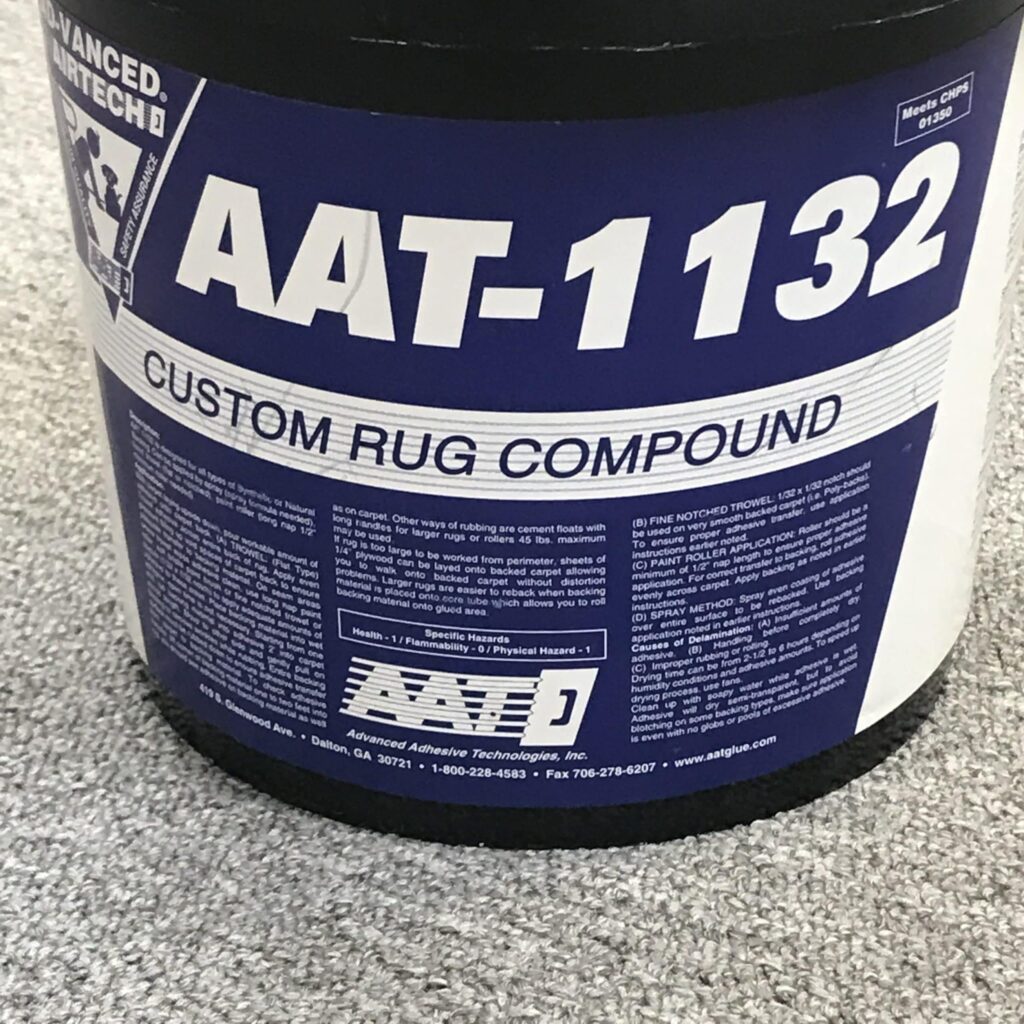
Bond Products offers AAT1132, a latex rug backing compound designed for customers who make custom rugs or repair existing ones, including antique rugs. It’s available in 1-gallon and 4-gallon containers, which makes it practical for both small repairs and larger production runs.

AAT1132 is built for stability and flexibility, so rugs hold together under regular use without becoming brittle.

What Is AAT1132?

AAT1132 is a latex compound used to stabilize or repair carpets and rugs. It has a flexible formula that dries fast and clear, so it won’t discolor the rug. Additionally, the compound does not yellow over time and ages well once applied.

Dry time typically ranges from 2.5 to 6 hours, with humidity and application thickness affecting cure time. When properly stored, AAT1132 is shelf-stable for up to 12 months from the manufacture date.

How Is AAT1132 Used? 

AAT1132 is commonly used on custom area rugs and carpets to laminate secondary backings and add overall stability. Customers also use it to attach carpet backing, including Grey Felt Secondary Carpet Backing, MOVENOT Secondary Felt, Double Grip Rubber Backing, and other compatible materials.

It is also well-suited for repairing the backing of antique carpets.

Many antique and oriental rugs may have sustained damage over time. Some wear is expected and does not affect a rug’s character or usefulness. Others need reinforcement to stay in service. Applying a latex compound like AAT1132 strengthens the backing and helps prevent fraying or further separation.

How to Apply AAT1132

To apply AAT1132, pour a workable amount onto the back of the carpet and spread it evenly using one of the following methods:

  • With a flat trowel
  • With a fine notched trowel
  • With a paint roller with a long nap (½ inch minimum)
  • With a sprayer

Apply the compound evenly across the entire backing, avoiding pooling or heavy buildup. Once the backing is placed and pressed down, the rug is ready to cure.

Sizes and Availability

Since AAT1132 is easy to apply and dries clear, it can be used by professionals and DIY customers alike. It is sold in 1-gallon jugs for $30 and 4-gallon buckets for $85. No rug backing job is too big or too small! 

If you make custom rugs or repair antique rugs and need a reliable way to stabilize rug backings, AAT1132 is a solid option. Call 1-888-800-BOND to place an order or learn more.

AAT1132 – The Rug Backing Stabilizing Compound You Need Read More »

Portable Binder Cart

Save Your Knees and Back by Using our Portable Binder Cart

Every job has its challenges, but physical work, especially when repeated day after day, can take a real toll on your body. Carpet binding is one of those jobs. It involves constant, repetitive movement and sustained pressure on your hands and knees.

To reduce that strain, Bond Products offers a portable binder cart that makes binding work easier on your body and more efficient overall.

The Risk of Repetitive Stress Injuries

It’s easy to underestimate how much damage small, repeated movements can cause over time. Even something as simple as clicking a mouse all day can lead to wrist or arm pain and limited mobility.

Repetitive stress injuries are common because muscles and tendons aren’t built for nonstop motion without support. Carpet binding is far more demanding than desk work. It requires you to support your body weight on your hands and knees for extended periods, which increases the risk of joint inflammation and long-term wear.

The Portable Binder Cart Makes the Job Easier

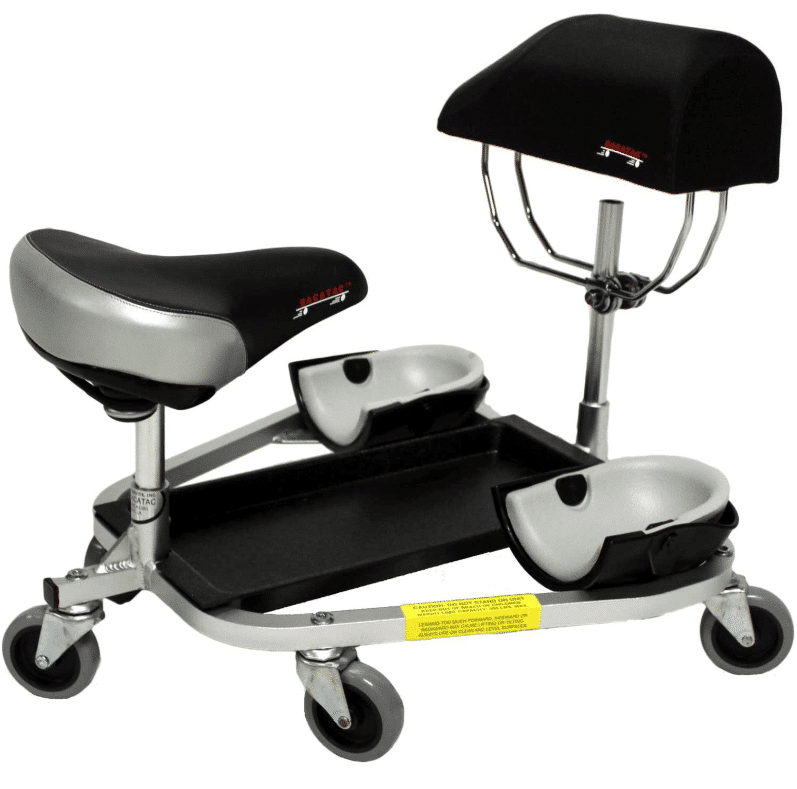
The portable binder cart is designed for jobs that require kneeling and two-handed work. It reduces strain while helping you stay mobile and balanced. The cart works seamlessly with Bond PBL, PBB 2×2 or 4×4, Alpha Mini,  and PBL-TX binders.

It supports your chest while you work and features a comfortable, fully adjustable seat that adjusts to your height and reach. The frame is lightweight but strong, made from aluminum. It rolls smoothly on 3-inch polyurethane casters with ball bearings and includes durable, waterproof knee pads.

Instead of crawling backward and shifting your weight with every movement, you can glide forward or backward with a simple push. Over a long job, this reduction in strain is significant.  You can see how the portable binder cart works in this demonstration:

Most users are surprised by how much simpler carpet binding feels once they switch to the cart. It’s also useful beyond binding work. Many people use it for tile installation, cleaning, or even gardening. It works well for any task that keeps you low to the ground for extended periods.

Proper Use and Maintenance

Before each use, take a moment to check the cart. Make sure the seat is adjusted correctly and that the adjustment screw and bolt are tight. Also, confirm the snap button is fully locked and the casters are securely fastened.

For best performance, periodically clean and oil the caster ball bearings. Flooring environments tend to collect dust and debris, making regular maintenance especially important.

The maximum recommended weight for the portable binder cart is 300 pounds.

If your work keeps you on your hands and knees and you want a more ergonomic way to get the job done, the portable binder cart is a simple upgrade that makes a real difference. Order yours from Bond Products and make binding work easier on your body.


Save Your Knees and Back by Using our Portable Binder Cart Read More »

nylon carpet

Why Is Nylon Carpet Such a Popular Choice?

There are many different types of carpet, but nylon dominates the market today. That hasn’t always been true. In 1950, roughly 90 percent of all carpets and rugs were woven, not tufted. Advances in materials science flipped that balance. Today, about 90 percent of carpets are tufted nylon, while woven carpets account for only a small fraction of the market.

So why did nylon take over? The answer has less to do with trends and more to do with chemistry, manufacturing, and durability.

What Is Nylon? 

Nylon is a family of synthetic polymers. In simple terms, it’s a plastic made up of long, repeating molecular chains. Scientists can adjust how those chains form and combine with other substances, giving nylon very different properties depending on its use.

Carpet is one of the most common uses, but not the only one. Nylon also shows up in everything from clothing to industrial materials. In flooring, its strength and resilience make it especially useful.

A Brief History of Nylon Carpet

Before nylon, the most important synthetic fiber was rayon. This polymer fiber was invented in the 19th century by the Frenchman, Count Hilaire de Chardonnet, a chemist seeking to create a lower-cost alternative to silk.

True synthetic fibers came later. In the early 1930s, Dr. Wallace Hume Carothers, often called the father of polymer science, developed and patented Nylon 6,6 while working at DuPont. The first consumer product made from it wasn’t carpet at all. It was toothbrush bristles.

Carpet came next. By the mid-1950s, DuPont had developed bulked-continuous filament (BCF) nylon, which made modern tufted carpet possible. At the same time, postwar housing boomed. With new homes going up quickly, families needed finishes that were affordable and durable. Low-pile looped nylon carpet fit that need perfectly.

The rise of wall-to-wall carpet wasn’t driven by nylon alone. New spinning techniques, dye methods, tufting machines, printing processes, and backing materials all emerged around the same time. Together, they reshaped interior design for decades.

How Nylon Carpet Is Made

Nylon begins with crude oil. Processing converts it into chemical intermediates, such as hexamethylenediamine and adipic acid, which combine to form nylon salt.

From there, manufacturers produce nylon as either staple fiber or bulked continuous filament. Carpet mills spin the filament into yarn and tuft it into a backing to create finished carpet.

The fiber’s internal structure matters. Nylon 6,6 has a more compact molecular structure than Nylon 6, making it harder and more resilient. That density helps it resist crushing, dirt, and wear.

Why Nylon Works So Well for Carpet

Nylon 6,6 is especially well-suited for high-traffic areas, whether in homes, offices, or public spaces. It holds its shape under pressure, resists mildew, and doesn’t trigger allergies the way some natural fibers can.

Maintenance is straightforward compared to many alternatives. Nylon may pill over time and can generate static, but it typically lasts long enough to make those issues manageable.

While nylon carpet doesn’t carry the visual prestige of a handwoven Aubusson rug, it excels where durability and ease of care matter most. It’s available in a wide range of styles, from plush cut pile to tightly looped berber, which helps explain its continued popularity.

Using Nylon Carpet Remnants as Rugs

Nylon’s durability also makes it a good candidate for reuse. Larger remnants can be cut down and turned into smaller rugs that hold up well in entryways, basements, garages, or workspaces.

If you have a nylon carpet remnant you’d like to turn into a rug, Bond Products offers Instabind carpet binding tape for finishing edges, along with rug backing that help keep finished pieces in place. Because nylon lasts so long, repurposing remnants often makes more sense than replacing them.

This combination of strength, flexibility, and longevity is ultimately why nylon remains the most common carpet material today.


Why Is Nylon Carpet Such a Popular Choice? Read More »

A Christmas message from Bond Products for 2025

Looking Back on 2025: A Christmas Message from Bond Products

As the holiday season arrives and 2025 draws to a close, we at Bond Products want to take a moment to reflect on the year behind us and extend our heartfelt thanks to our customers, partners, and friends. Being a family-owned and operated business, we understand the value of loyalty, hard work, and personal service. We’ve seen those same values reflected in our amazing community this year.

A Year of Milestones and Growth

Customer Appreciation Week was a standout moment for us in 2025. Held in October, it was our first time hosting this type of event, and it was a tremendous success. We had the chance to meet face to face with customers, offer hands-on equipment repairs, training, and demos, and most importantly, to say thank you to you, our customers. 

We also saw a surge in demand for our Alpha Mini Sergers, as more of you discovered how reliable and compact these machines are for both professional and home use. It’s been rewarding to see them become an essential part of so many workrooms.

And of course, we are always grateful for the kind words our customers send us. One of our favorite, and most creative, reviews from this year came from Gary Blum. He wrote:

“​I was desperate to repair a burn mark on the cloth edge of a very expensive, large sisal carpet. After speaking with some unhelpful agents at other companies, I lucked upon Bond Products Inc.

​Not only did they have everything a DIY person needed to perfectly cover the damaged trim, but PollyAnna was a joy to speak with and Matt was beyond helpful. He perfectly matched the color I needed from a photo I sent him via email and only recommended what I truly needed.

​So, if you don’t want to be treated like an “00” or worse, get “killed” by uncaring customer service agents… you now know who to call.”

Gary Blum's repaired sisal rug
Gary Blum’s repaired sisal rug

Thank you, Gary!

What’s Coming in 2026: New Rug Backings

Looking ahead to 2026, we’re expanding our product line with brand new rug backing options that offer both performance and peace of mind. These include:

  • Eco Rug Backing Pads (Pet Barrier Rug Pad): Made in the USA from recycled materials, these pads provide non-slip protection and moisture resistance. They’re safe for all hard surface floors and available in multiple thicknesses.

  • Peel & Stick Rubber Rug Backing: This easy-to-use backing will allow you to apply a firm, grippy base to rugs with even greater speed and simplicity.

These additions align with our commitment to offering practical, professional-grade tools and supplies that help you do more, whether you’re running your own business or upgrading your home.

Thank You for Being Part of the Bond Family

We know many of you are small business owners yourselves. You’ve faced supply challenges, changing markets, and evolving customer demands in 2025. Yet you continue to grow, create, and serve! We hope our products have helped you stay flexible and resilient this year.

So from all of us at Bond Products: Thank you for your support, your loyalty, and your trust. We wish you a very Merry Christmas and the very best in the year ahead. May 2026 bring you success, health, and new opportunities!

Looking Back on 2025: A Christmas Message from Bond Products Read More »

gratitude Thanksgiving

Happy Thanksgiving from Bond Products!

2025 has been another year full of challenges, big changes, and emotional highs and lows. From political unrest and global wars to personal losses and daily stress, it’s easy to feel overwhelmed and ready to move on. When everything feels heavy, it’s natural to lose sight of the good that still surrounds us. That’s why Thanksgiving remains one of the most meaningful holidays we have.

Looking Back to Move Forward

Thanksgiving reminds us to stop and reflect. If we step back and look at the history and meaning of Thanksgiving, we gain some valuable perspective. The Pilgrims who sat down with the Wampanoag people in Plymouth in 1621 had survived hardship most of us can barely imagine. Of the 102 original settlers, only 51 lived through that first brutal year.

The Pilgrims arrived too late in the season to plant crops. They were unfamiliar with the Massachusetts climate, the local terrain, and its native peoples. Their first shelter burned down in the dead of winter, forcing everyone to live aboard the Mayflower through freezing temperatures and illness. Food was scarce. Disease spread rapidly. Yet even after this, they still chose to celebrate their survival with a feast of gratitude.

Why Thanksgiving Still Matters

In light of their suffering and perseverance, it’s easier to see how much we have to be grateful for. Most Americans today live with freedoms the Pilgrims could only dream of. We have the freedom to work, to worship, and to live safely in communities with support systems and opportunities.

The meaning of Thanksgiving isn’t just tied to its origins. It’s about pausing to recognize the good, no matter how difficult the year has been. Whether you’re with family, friends, or taking a quiet moment on your own, giving thanks can reframe your perspective and offer comfort when the world feels uncertain.

A Word from Bond Products

At Bond Products, we are proud of our long family history, our business roots in Philadelphia, and our continued work in the flooring and carpet industry. We’re thankful for our loyal customers, our dedicated team, and the opportunity to serve people across the country who care about craftsmanship and quality.

We hope you and yours enjoy a peaceful and joyous Thanksgiving. Remember, gratitude doesn’t have to be reserved for this holiday—it’s a gift we can give ourselves every day.

Happy Thanksgiving from Bond Products! Read More »

glue guns

The History of Glue and Glue Guns

When most people think about glue guns, they picture craft projects or small home repairs. But glue guns have become essential tools in modern manufacturing and daily life. They offer safety, accuracy, and convenience, improvements that dramatically changed how glue is applied across industries.

What Is Glue Made Of?

Before glue guns, adhesives came from very different sources. More than a hundred years ago, glue was often made from the leftover parts of butchered animals, like hooves, bones, skin, and tendons. Boiling these tissues released collagen, a naturally sticky protein used to make animal glue. That’s where the phrase “fit for the glue factory” came from.

Animal-based glues worked, but they had serious drawbacks. They were water soluble, meaning they often broke down in heat or humidity. Other glues came from tree resins, especially from conifers, but those also had limitations.

These types of glue required heating to high temperatures and were applied with brushes. The process was messy, imprecise, and dangerous. Factory workers frequently burned themselves, and the glue took a long time to dry. Imagine trying to install Instabind using a pot of boiling glue and a brush—that was the reality before glue guns.

The Invention of Thermoplastic Adhesives

The turning point came in the 1940s when Paul Cope developed a thermoplastic adhesive for Procter & Gamble. Shortly after, George Schultz saw injured workers at a shoe factory and realized a better delivery method was needed. He invented the first glue stick gun, known as the Polygun. He then launched the Industrial Shoe Machinery Company. By 1973, 3M had purchased the company and helped popularize glue stick guns for industrial and consumer use.

How Does a Glue Gun Work?

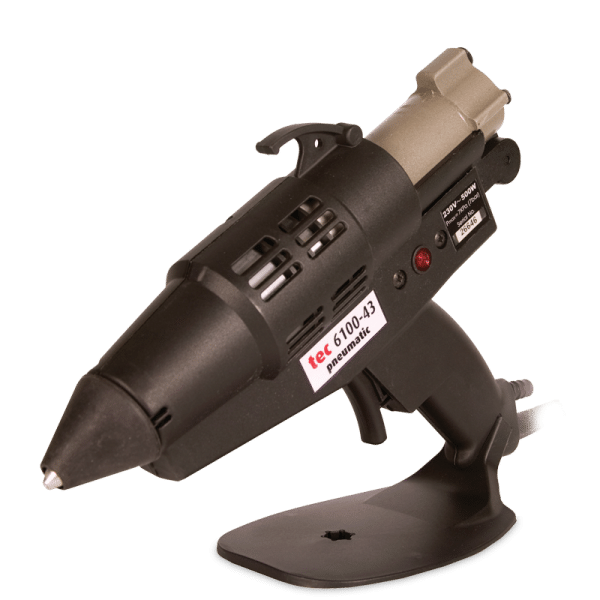
Glue guns use thermoplastic adhesive sticks. These glue sticks are fed into the back of the gun, where they’re melted and dispensed through a nozzle. The hot glue spreads easily, then cools quickly to form a solid bond.

Unlike water-based glues, thermoplastic adhesives don’t dissolve in humidity. They create a strong, long-lasting hold and dry in seconds. Glue guns also protect your hands. With no need for brushes, fingers are much less likely to touch hot glue during application.

Why Glue Guns Are Better

The advantages of glue guns are hard to ignore:

  • Speed: The glue sets quickly, saving time.
  • Precision: You can apply glue in a clean, straight line.
  • Durability: Thermoplastics form tough, moisture-resistant bonds.
  • Safety: The gun design keeps glue and fingers separate.

These improvements make glue guns indispensable in industries ranging from carpet installation to electronics, woodworking, and crafts.

Glue Guns at Bond Products

At Bond Products, we carry a wide range of glue guns for both professional carpet work and home DIY use. Whether you’re securing binding, working with Instabind, or assembling something more creative, a good glue gun is a must-have tool. Explore our glue and glue gun selection to find the right tool for your needs.


The History of Glue and Glue Guns Read More »

how to fix carpet edges

How to Fix Carpet Edges: A Complete Guide to Carpet Binding and Edging

Frayed or unfinished carpet edges can detract from the appearance of your flooring and lead to further damage over time, but how do you fix carpet edges? How do you keep a carpet from fraying? Whether you’re dealing with wall-to-wall carpeting, area rugs, or carpet remnants, properly finishing the edges is essential for durability and aesthetics. This guide will walk you through various carpet edge finishing options, including binding, serging, and DIY solutions like Instabind, to help you choose the best method for your project.

Understanding Carpet Edge Finishing

Carpet edge finishing involves applying a protective and decorative treatment to the raw edges of a carpet to prevent fraying and enhance its appearance. The method you choose depends on the carpet’s location, usage, and your desired look.

Carpet Binding

Carpet binding is a process where a fabric or tape is sewn or glued to the carpet’s edge, providing a clean and durable finish. It’s a popular choice for creating area rugs from carpet remnants or finishing the edges of custom-sized rugs.

Types of Carpet Binding Materials

  • Cotton Binding Tape: Offers a natural look and is available in various widths (e.g., 3/4″, 1-1/4″, 3″, 5″) to suit different styles.
  • Polyester Binding Tape: Known for its durability and colorfastness, making it suitable for high-traffic areas.
  • Faux Leather Binding Tape: Provides a sophisticated appearance, ideal for upscale interiors.
  • Veltron Poly Binding: A synthetic option that offers strength and a sleek finish.
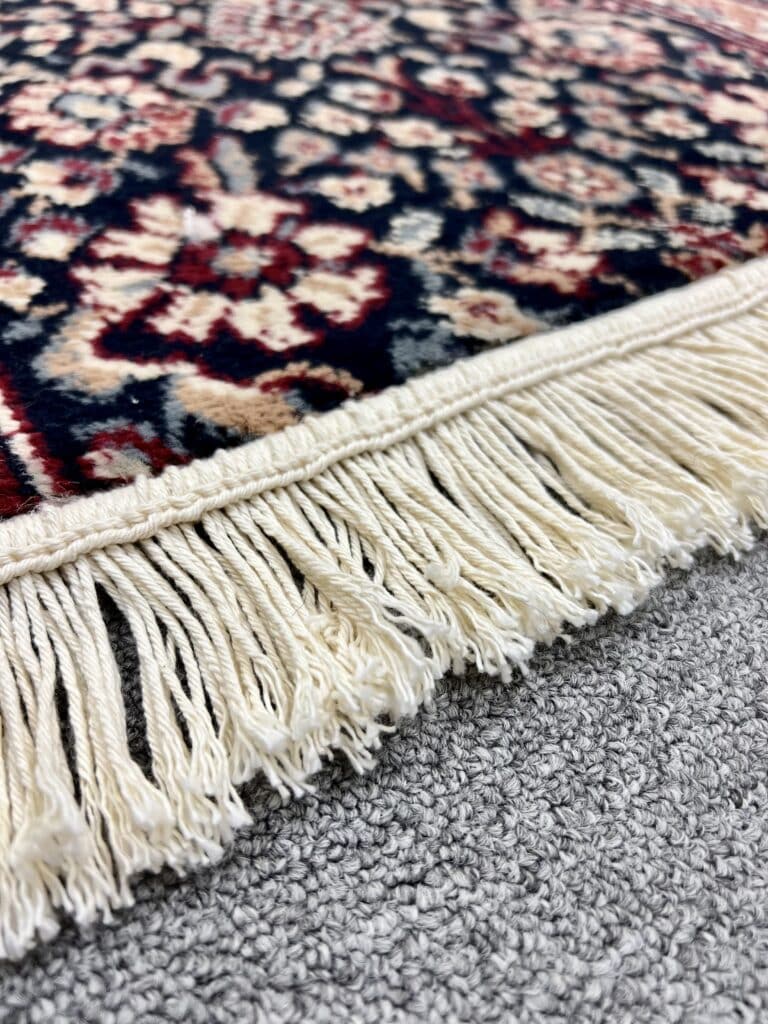
  • Fringe: Add a fringe to a rug for decoration or replace a damaged fringe already on the carpet.

Bond Products offers a wide range of binding tapes to match your carpet’s color and texture, ensuring a seamless look.

Carpet Serging

Carpet serging involves wrapping yarn around the carpet’s edge, creating a continuous, overlocked stitch that resembles a hand-sewn finish. This method adds a touch of elegance and is commonly used for higher-end rugs.

Serging Options

  • Cotton Serging Yarn: Provides a traditional, soft finish.
  • Nylon Serging Yarn: Offers increased durability and is available in various colors.
  • Serging Tape: Simplifies the serging process and ensures uniformity.

Bond Products supplies both the materials and equipment needed for serging, catering to professionals and DIY enthusiasts alike. 

DIY Carpet Edge Finishing with Instabind

For those seeking a do-it-yourself solution, Instabind offers an easy and cost-effective way to finish carpet edges without sewing. This adhesive-based binding tape allows you to create a professional-looking edge using basic tools like scissors and a hot glue gun.

Instabind Styles

  • Regular Binding Style: Mimics traditional binding without visible stitching.
  • Cotton Binding Style: Provides a natural, soft appearance.
  • Synthetic Serge Style: Replicates the look of machine serging.
  • Cotton Serge Style: Offers a handcrafted serged finish.
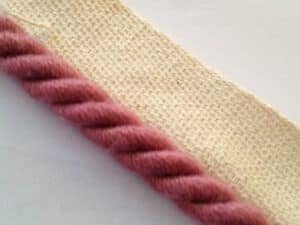
  • Rope Edge Style: Adds a decorative, nautical flair.
  • Faux Leather Binding: Delivers a luxurious leather-like look.
  • Fringe Binding Style: Enhances rugs with a classic fringe.
  • Outdoor Marine Style: Designed for outdoor and marine environments.
  • Safety Edge Style: Features a reflective strip for increased visibility.

Each Instabind style is designed for specific applications, allowing you to customize your carpet’s edge to match your decor and functional needs.

We also offer an Instabind Starter Kit if you’d like to try carpet binding with a number of projects and styles. Our rule of thumb for selecting a binding is: if it’s a cotton or wool rug or carpet, use a natural (cotton) binding or serging style. If it’s a synthetic rug or carpet, use a synthetic binding or serging style. The highest quality look will still be the cotton one, but the synthetic Instabind looks great too.

Attach Instabind to a Carpet

Step 1

Assemble your tools: a hot glue gun, scissors, and clear tape.

Step 2 

Use a carpet cutter and a straight edge to trim off any strings or frayed pieces along the sides of the carpet and make sure that its sides are straight. 

Step 3

Take the Instabind you’ve chosen and make a clean cut. 

Step 4 

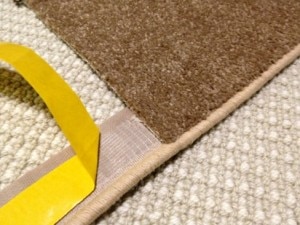
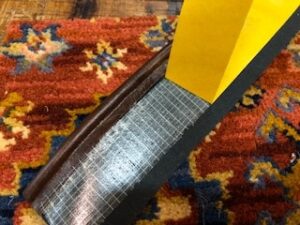
Pull back the paper on the Instabind and begin applying it to the carpet in the middle of one cut edge. Extend the Instabind past the corner of the carpet, and, using the corner as a guide, snip the flat part of the Instabind, stopping at the piping. With the paper turned back, overlap the backing while rounding the corner. Continue around the carpet until you return to the beginning. You can readjust if necessary at this stage in the project. Using your starting point as a guide, make the finishing cut with your scissors and trim any excess strings.

Step 5

Seal the beginning and ending pieces of the Instabind together with a bead of hot glue. Now apply a ⅛” bead of hot glue between the edge of the Instabind and the carpet and hold in place a few minutes to let the glue set. Continue this process all the way around the carpet. For a more finished looking back, trim the Instabind backing at a 45 degree angle.

Step 6

Put your beautiful new bound piece of carpet in the place you’ve selected for it in your home.

That’s all there is to it. With the Instabind attached, you should have no problems with your carpet edges fraying!

Choosing the Right Edge Finishing Method

When deciding how to finish your carpet edges, consider the following factors:

  • Location: High-traffic areas may benefit from durable binding or serging.
  • Aesthetics: Choose a finish that complements your interior design.
  • Budget: DIY options like Instabind can be more cost-effective.
  • Skill Level: Assess whether you prefer a professional installation or a DIY approach.

FAQs

Q: Can I install carpet binding myself?
A: Yes, with products like Instabind, you can achieve professional-looking results without specialized equipment.

Q: How do I choose between binding and serging?
A: Binding is typically more durable and straightforward, while serging offers a more refined, decorative finish.

Q: Where can I purchase carpet edge finishing materials?
A: Bond Products provides a wide range of binding tapes, serging yarns, and DIY solutions like Instabind through our website.

Properly finishing your carpet edges not only enhances the appearance of your flooring but also extends its lifespan. Whether you opt for traditional binding, elegant serging, or a DIY solution like Instabind, Bond Products has the resources and expertise to help you achieve the perfect finish for your carpets.

How to Fix Carpet Edges: A Complete Guide to Carpet Binding and Edging Read More »

all of the different styles of Instabind

How to Best Use All of the Styles of Instabind Carpet Binding

WIf you’re looking to finish the edges of a rug or leftover piece of carpet without hauling it to a shop or sewing it yourself, Instabind is your new best friend. It’s a no-sew carpet binding solution from Bond Products that lets you create a polished, professional edge with nothing more than scissors, glue, and a bit of patience.

But did you know there are nine different styles of Instabind? Each one is designed for a specific look or use – whether you’re working on a fancy rug, a rugged outdoor mat, or something creative in between.

In this blog post, we’ll walk you through how to best use all the styles of Instabind carpet binding, so you can pick the one that works best for your next project.

What Is Instabind?

Before we jump into the different styles, here’s a quick refresher: Instabind is an adhesive-based carpet binding tape that wraps around the edge of your carpet and gets glued down. There’s no sewing required. It gives you the look of traditional binding or serging without the need to purchase a carpet binder or to hire a professional to bind your carpet.

1. Instabind Regular Binding Style

The All-Purpose Classic

This is the original Instabind, and it works well for just about any carpet. It gives you a clean, straight edge that looks like the traditional binding done with a sewing machine. Regular Binding style Instabind is best used for:

2. Instabind Cotton Binding Style

Soft and Natural

Looking for something a little softer and more natural? The cotton version has a smooth, traditional finish that feels great underfoot. Cotton Binding style Instabind is best used for:

3. Instabind Synthetic Serge Style

Instabind feedback

Built Tough

This one mimics machine serging (those tight yarn wraps you see on fancy rugs), but it’s synthetic and durable. It’s perfect for high-traffic areas or homes with pets. Synthetic Serge style Instabind is best used for:

  • Synthetic rugs
  • High-traffic rooms like hallways
  • Rugs for kids or pet areas
  • Anywhere durability is key

4. Instabind Cotton Serge Style

The Softer Side of Serging

This style also gives you that yarn-wrapped serged look, but with natural cotton. It’s more elegant and works well for more refined spaces. Cotton Serge style Instabind is best used for:

  • Cotton or wool rugs
  • Handmade-style area rugs
  • Upscale or vintage rugs
  • Decorative carpet projects

5. Instabind Rope Edge Style

Make It Nautical or Decorative

With a rope-like trim, this Instabind style is for the bold. It adds a pop of texture and looks great in themed rooms or creative interiors. Rope Edge style Instabind is best used for:

  • Beach house rugs
  • Nautical-themed rooms
  • Decorative edges that need to stand out

6. Instabind Faux Leather Binding

faux leather carpet binding

High-End on a Budget

If you want that rich leather look without the cost or maintenance, Faux Leather Instabind gives your rug a luxury finish without the sewing or the hassle. Faux Leather Binding style Instabind is best used for:

  • Office or den rugs
  • Custom hallway runners
  • Stylish DIY mats

7. Instabind Fringe Binding Style

Instabind Fringe Style

Add a Classic Touch

Fringe adds character and charm to rugs, especially oriental or vintage styles. This binding style lets you do it yourself, even if you’re not a sewing pro. Fringe style Instabind is best used for:

  • Oriental rug restorations
  • Antique-style carpet projects
  • Adding personality to handmade rugs

8. Instabind Outdoor Marine Style

marine carpet binding

Built for the Elements

Planning to bind carpet for a patio, deck, or boat? This Instabind version is UV- and moisture-resistant, so it can stand up to outdoor conditions. Outdoor Marine style Instabind is best for:

  • Marine carpets
  • Outdoor area rugs
  • Covered porches or sunrooms

9. Instabind Safety Edge Style

Safety Meets Style

This unique style has a reflective edge that helps increase visibility. It’s great for low-light areas or industrial spaces where safety matters. Safety Edge style Instabind is best for:

  • Commercial entry mats
  • Garage or warehouse rugs
  • Stair treads in dim areas

FAQs About Instabind Carpet Binding


Q: Is Instabind easy to install?

Yes! Instabind is designed for DIY use. You just cut the length you need, stick it to the carpet edge, wrap it, and glue it in place.

Q: What tools do I need to use Instabind?

Scissors, a hot glue gun or strong adhesive, and maybe some painter’s tape to help guide your corners. That’s it!

Q: Can I use Instabind on curved carpet edges?

Yes, most styles—especially cotton and regular binding—are flexible enough for gentle curves. Just take your time and work slowly.

Q: How durable is Instabind?

Very! Especially styles like synthetic serge or marine binding, which are designed for heavy wear or outdoor use.


FAQs About Bond Products

Q: What is Bond Products?

Bond Products is a trusted, family-owned company based in Philadelphia. We’ve been supplying tapestries, tapes, carpet binding tools and machines in one form or another since 1910.

Q: Can I buy directly from Bond Products?

Yes! You can order all Instabind styles and other supplies online or by phone during our working hours.

Q: Do you offer bulk pricing or wholesale options?

Yes—if you’re a contractor, flooring company, or reseller, contact Bond Products directly for volume pricing and shipping options.

Q: Do you offer support for using your products?

Absolutely. Our team of experts is friendly and happy to help. Just give us a call at 1-888-800-BOND!

Final Thoughts: Which Instabind Style Is Right for You?

Whether you’re fixing up an old rug, creating a new one from scratch, or adding a personal touch to your space, Instabind makes carpet binding easy. With nine unique styles to choose from, there’s something for every project – indoors, outdoors, fancy or functional.

Explore the full Instabind collection on our website, and don’t hesitate to reach out with questions. We’re here to help you finish strong!


How to Best Use All of the Styles of Instabind Carpet Binding Read More »

best flooring for allergies

Best Flooring for Allergy Sufferers: What to Know This Spring

Spring brings its welcome return of warmer days, blooming flowers, and more sunlight. We throw open the windows, deep clean our homes, and start thinking about remodeling or refreshing our interiors. But while spring is a time of renewal for many, it can also be a difficult season for allergy sufferers. What is the best flooring for allergies?  

In a previous post, we discussed how wool rugs affect allergies. Now, as pollen levels rise, we’ll take a closer look at how different flooring options can impact indoor air quality and your health. Before you start your next home improvement project, like turning a carpet remnant into a custom rug or restoring a vintage rug, it’s worth understanding how flooring choices can either trap or reduce allergens.

Are Carpets Bad for Allergies?

It’s a common belief that carpets are bad for people with allergies, but the truth is more nuanced. All flooring surfaces accumulate allergens. Hard floors—like hardwood, tile, or laminate—are easier to clean since you can quickly sweep or vacuum away dust and pollen. That makes them a practical choice for allergy sufferers.

But not all carpet is created equal. If you prefer carpet or rugs, tightly woven varieties are better than loose weaves, and shorter fibers trap fewer allergens than shag or plush styles. Avoid high-pile rugs and carpets, especially if allergies are a concern.

Another smart choice is synthetic carpet made of nylon or polyester. These fibers are resistant to moisture, making them less appealing to mold and mildew. Just be sure to vacuum frequently, especially during allergy season. Since allergens are heavy and tend to fall to the floor, consistent vacuuming is essential to keeping your home allergen-free.

Deep Cleaning and Maintenance

Spring is the perfect time to thoroughly clean your carpets. If you own an antique or high-value rug, skip the DIY shampooing and call a professional. Using the wrong method or chemicals can permanently damage delicate fibers. Professional rug cleaners have the expertise and equipment to remove dirt, allergens, and odors without harming your investment.

Check for Damage While You Clean

As you’re spring cleaning, take a few moments to inspect your carpets and rugs. Are there snags, holes, or worn bindings? Early repair is always easier than dealing with large areas of damage. Worn or unraveling edges can often be repaired at home with products like Instabind or traditional binding tape. If the damage is more extensive, Bond Products offers professional-grade supplies and can assist with your repair needs.

Ready to Freshen Up?

Spring is a time to breathe new life into your home. Choosing the best flooring for allergy sufferers—whether that means using a bound natural-fiber rug, cleaning your synthetic carpet, or simply repairing worn edges—can make a big difference in how you feel. Clean, allergen-free flooring supports both your comfort and your health.

If you’re looking for binding, backing, or rug repair supplies this spring, Bond Products has everything you need. Contact us at 1-888-800-BOND with questions. We’re always happy to help.


Spring Carpet Cleaning & Allergy Prevention FAQ

What types of carpet are best for people with allergies?

Low-pile, tightly woven carpets made from synthetic fibers like nylon or polyester are best for allergy sufferers. These materials don’t trap allergens as easily and are less likely to harbor mold or mildew.

Are hard floors better than carpets for allergy sufferers?

In general, yes. Hard flooring surfaces like hardwood, tile, or laminate are easier to clean and do not trap dust, pollen, or pet dander. However, with the right type of carpet and regular cleaning, allergy-friendly carpet is achievable.

How often should carpets be vacuumed to reduce allergens?

Weekly vacuuming is recommended, or more frequently during high pollen seasons. Use a vacuum with a HEPA filter to trap allergens effectively.

Can I clean antique rugs myself during spring cleaning?

No. Antique or high-value rugs should be professionally cleaned to avoid damage. DIY methods or over-the-counter cleaners can ruin delicate fibers or dyes.

Is shampooing carpets necessary, or is vacuuming enough?

Vacuuming is essential for removing surface allergens, but deep cleaning (shampooing or steam cleaning) should be done at least once or twice a year to remove embedded allergens and grime.

How can I prevent allergies from carpet during spring?

  • Use synthetic carpets with tight weaves
  • Avoid shag or high-pile rugs
  • Vacuum frequently with a HEPA-filter vacuum
  • Have rugs professionally cleaned
  • Use allergen-blocking rug pads or backing

When should I repair carpet damage found during spring cleaning?

As soon as possible. Small snags, holes, or unraveling edges are easier and cheaper to fix when caught early. Addressing these issues now prevents bigger repairs or replacement later.

What should I do if my carpet edges are fraying?

You can replace worn binding with Instabind from Bond Products. It offers a professional-looking, DIY-friendly edge binding solution available in multiple styles and colors.

Can Bond Products help with allergy-friendly carpet maintenance?

Absolutely. Bond offers tools and materials for binding, repairing, and restoring carpets in ways that can reduce dust and allergens. Our customer service team can help you select the best products for your specific needs.


Best Flooring for Allergy Sufferers: What to Know This Spring Read More »

Close the CTA

**WE ARE CURRENTLY EXPERIENCING INTERNAL CHANGES **

THANK YOU FOR YOUR UNDERSTANDING FOR ANY DELAYS

Scroll to Top