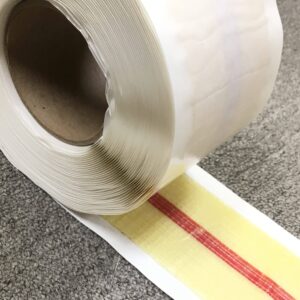
Here at Bond Products, we love hearing from customers who share how our products make a difference in their projects. For Valentine’s Day, we received a heartfelt review from a happy customer who discovered just how easy and satisfying it is to use Instabind carpet binding for DIY projects. Here’s what she had to say:
“I have enclosed 3 pictures of rugs I have used the Instabind on. We have been replacing carpeting with Pergo, and Pergo is cold so we needed some area rugs. I tend to pick accent colors rather than matching ones to bind with. The crimson rope binding I just ordered will go in a room decorated in red, white and blue, and the carpeting I am binding is a variegated twist of light beige and Williamsburg blue in each strand, so the crimson matches the bead board color in the room.
I love Instabind, and it is much easier to go purchase a carpet remnant and bind it than to buy rugs you really don’t like in a store. The selection is so much bigger. Thanks again. A happy customer.
–Pamela L., Washington State
Why Our Customers Love Instabind Carpet Binding
This review highlights just a few of the reasons customers choose Instabind:
Professional Finish: The result looks just like traditional machine binding, giving your carpet edges a clean, polished look.
Versatile Options: With styles like regular binding, faux leather, rope edge, and even serging, Instabind has something for every project.
Budget-Friendly: Skip the cost of professional binding services and get the same results on your own time.
Make This Valentine’s Day the Start of Your DIY Carpet Binding Journey
Whether you’re transforming carpet remnants into new area rugs, repairing frayed edges, or adding a decorative finish to an existing carpet, Instabind makes it easy. Our customer’s story proves that with the right product and a little creativity, anyone can get professional-quality results at home.
If you’re ready to fall in love with your carpets all over again, try Instabind today. Browse our Instabind collection to find the style that best suits your project and get started on your own home improvement love story.
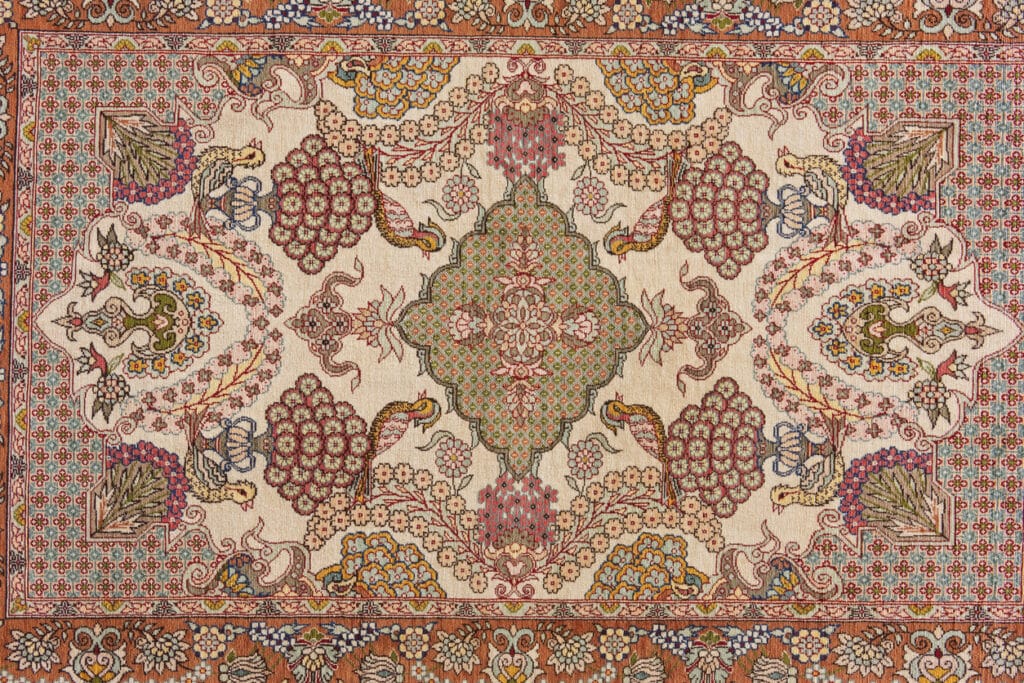
Antique rugs are more than just floor coverings, they’re heirlooms that tell a story. Whether you have a family treasure tucked away in your attic or a beautiful find from a flea market, knowing how to restore an antique rug can give it a second life. You can revive its color, texture, and charm with the right care, and it can once again warm a room, soften a floor, and be admired for years to come.
Finding Value in Old Rugs
Maybe you know someone who has the touch. This is the kind of person who can walk into an estate sale or antique shop and find something of real value hidden among the clutter. Often, that hidden treasure is a rug. Many older rugs have lasted for generations, crafted with exceptional skill and durable materials.
You might already own one yourself, perhaps a rug passed down through your family or stored away waiting to be rediscovered. Restoring an antique rug doesn’t have to be complicated. With a few key steps, you can bring it back to its former beauty.
Step 1: Have the Rug Professionally Cleaned
Cleaning is the most important first step when learning how to restore an antique rug. Over the years, rugs collect dust, dirt, stains, and even pet odors that can damage fibers if left untreated. While it may be tempting to clean it yourself, professional rug cleaners have the tools and experience to handle delicate materials like wool or silk safely.
A professional will clean your rug thoroughly, dry it properly, and remove embedded debris or lingering odors — all without harming the fibers or dyes.
Step 2: Repair Damaged Areas
Even the best-made rugs can show signs of wear over time. It’s possible to repair or replace worn fringes, loose threads, or torn sections without compromising the rug’s authenticity. Professional rug repair specialists can reweave damaged areas, tighten seams, and reinforce weak spots so the rug can withstand daily use again.
A little wear adds character, but proper repairs will help your antique rug remain functional and beautiful.
You can choose to have this done professionally or take on a DIY rug binding project at home using Bond’s carpet binding supplies. A clean, well-finished edge not only enhances the look of the rug but also helps protect it from further fraying.
Step 4: Choose the Perfect Spot
Once your rug has been cleaned, repaired, and re-bound, you’ll have a piece that’s ready to display proudly. Place it in an area where it can be appreciated but won’t face excessive foot traffic or direct sunlight. Antique rugs are stunning statement pieces in living rooms, studies, and entryways.
Bring New Life to a Family Treasure
Restoring an antique rug isn’t just about preservation. It’s about honoring craftsmanship and keeping tradition alive. With the right cleaning, repairs, and finishing touches, your rug can continue to bring warmth and beauty to your home for many years to come.
Our motto at Bond Products is “Every hard floor needs a nice area rug.” A stunning rug can transform a room, but not when it’s constantly moving underfoot. Whether you’ve invested in a delicate handmade rug or crafted your own hooked rug floor accent, it’s essential that it stays firmly in place when you’re walking on it. A sliding rug can be a safety hazard, disrupt your décor, and damage both the rug and the floor beneath. If you’re wondering how to keep your rugs from slipping, read on.
Stop Your Rugs from Slipping
Not only does a rug that moves around pose a safety concern, it also looks untidy. If you’ve spent time creating just the right look for a room, you don’t want a poor rug backing solution to undo all of that work. Bond Products offers several tailored solutions to keep your rugs secure, looking beautiful, and completely slip-free all year round.
Bond Products Rug Backing Options
Our carefully selected lineup of rug-backing solutions designed to keep your carpets securely in place on hard surfaces like hardwood, linoleum, and tile includes:
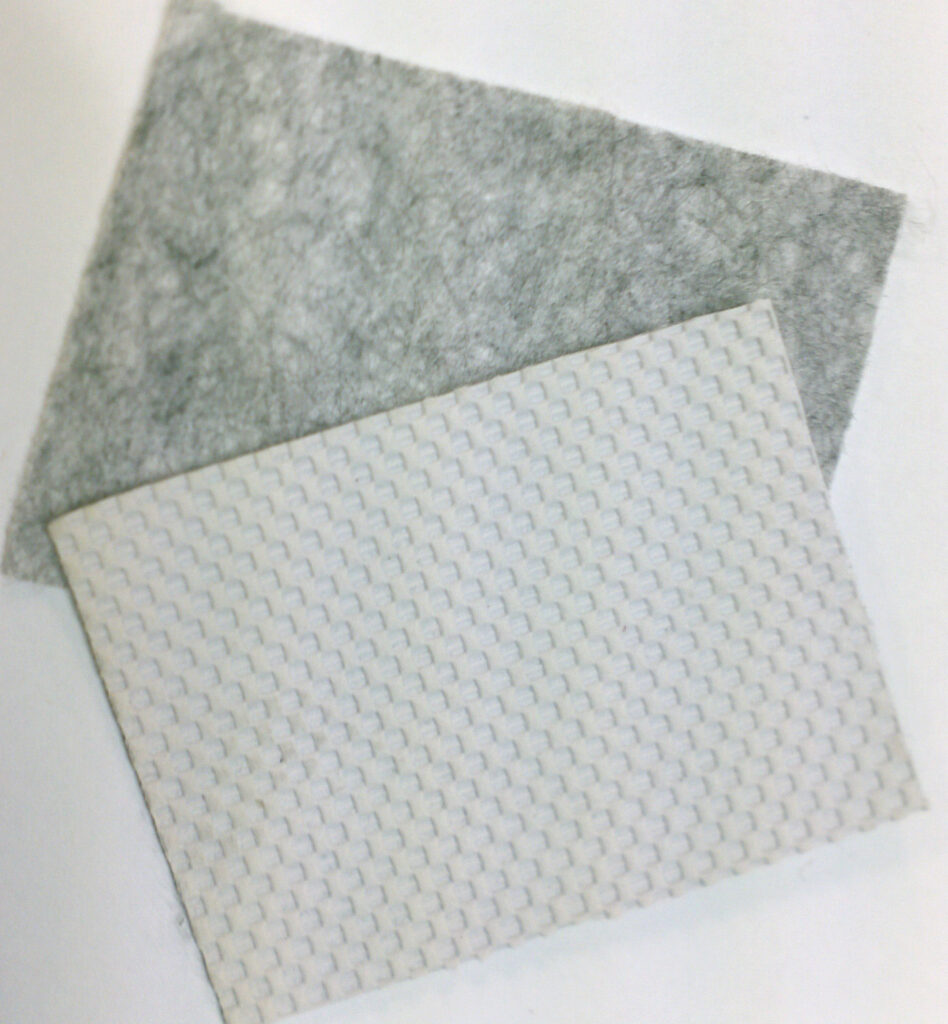
02TRACTIONBACK – Secondary Felt & Double Grip Rubber Backing This solution offers a dual-sided backing with felt on one side (ideal for placing over carpet) and rubber grippers on the other (for non-slip grip on hard floors). These backings can be attached using latex or spray adhesives and are rated for heated floors up to 80°F.
Eco-Grip Rug Pad Eco-Grip is a non-slip rug pad made from 100% plant-based oils that helps maintain rug position while adding a comfortable cushion underfoot.
Eco-Stay Rug Pad This is a durable, non-slip pad also made from 100% plant-based oils. It’s thinner and less cushioned than Eco-Grip, but great for keeping rugs flat and steady on any surface.
LOK-LIFT Rug Gripper (25 ft roll) LOK-LIFT is a discreet and effective gripper strip sold in 25-foot rolls, perfect for anchoring rug edges without the bulk of a full pad
Keep Your Home Safe and Stylish
A slipping rug is more than an annoyance, it’s a hazard. Whether you’re staging a room, protecting your surfaces, or securing cherished rugs, Bond Products has the backing solution you need. From kid-safe play areas to high-traffic entryways, we’ve got you and your floor covered.
Need help choosing? Call us at 1‑888‑800‑BOND, and our expert team will find the perfect solution for your rug and your home.
Do you know what truly makes a rug valuable? While cost often reflects demand, a rug’s intrinsic value lies in how it’s made. Not all rugs are created equal. Some are basic floor coverings, while others are meticulously crafted works of fiber art. Let’s explore the key differences between hand-tufted rugs and genuine hand-knotted (handmade) rugs.
Machine-Made Carpets: The Most Basic Option
Everything on this type of rug is made by machine, there are no individual modifications or touches, and it’s made in multiple quantities, often very large quantities. Machine-made rugs can be made from a number of materials, from synthetic to natural. This does not mean that a machine-made rug can’t be an attractive addition to your home. It simply means that it’s less valuable than other types
Hand-Tufted Rugs: Quick, Affordable, Attractive
Hand-tufted rugs are more valuable than machine-made rugs because they use the same kinds of high-quality fibers that weavers use for hand-knotted rugs, but they are much quicker to produce. Essentially the weaver prepares a rug backing with a design, and then injects tufts of wool or cotton yarn into it with a tufting gun. Once all of the yarn has been injected, another foundation, called a scrim, is applied with latex glue so that the fibers remain in place. After this the carpet loops are sheared to present a flat and dense appearance that is comfortable to walk on.
Hand-tufted rugs can be beautiful rugs and will last for a decade or more under foot traffic, but they are not individually crafted by one person over time with an eye toward color, texture, or weave. That is what hand-knotted rugs are.
Hand-Knotted Rugs: Timeless Treasures
Hand-knotted rugs are the pinnacle of craftsmanship. Each knot—between 50 and 400 per square inch—is expertly tied by hand onto warp strings on a loom. This labor-intensive process can take up to a year to complete, but the result is a durable, heirloom-quality rug that can last for generations. Hand-knotted rugs are renowned for their unmatched durability, artistry, and long-term value.
You can see that if a rug is painstakingly made with this much care and expertise, it is a treasure that should be protected and maintained. This means making sure that it is professionally cleaned on a regular basis and repaired when necessary, including being rebound.
Why It Matters
Longevity: Hand-knotted rugs are built to last, offering superior quality and value over time.
Aesthetic & Character: Every hand-knotted rug is unique, reflecting the weaver’s artistry, while hand-tufted rugs offer faster, stylish alternatives.
Budget & Lifestyle: Hand-tufted rugs are an excellent choice if you want beautiful design at a lower cost or prefer changing décor every 10–20 years. Hand-knotted rugs offer long-term investment and heirloom quality.
Ultimately, the choice between the two comes down to your goals. If you want a more affordable and decorative option, hand-tufted rugs are a solid choice. But if you’re investing in timeless craftsmanship and unmatched durability, a hand-knotted rug is the way to go.
Bond Is Here to Help
If you have questions about how to take care of or repair a rug in your home, Bond Products would be happy to help you with that challenge. Call us at 1‑888‑800‑BOND anytime!
Seamless carpet installation isn’t always possible, but a well-connected carpet seam can make your flooring look flawless. Whether you’re a DIYer tackling a home project or a professional installer looking for consistent results, learning how to connect carpet seams is essential.
Poorly joined seams can lead to visible lines, fraying, tuft loss, and even tripping hazards, but with the right tools and techniques, you can achieve a smooth, professional finish that lasts. This step-by-step guide will show you how to properly seam carpet using carpet seam tape, a seaming iron, and a few must-have tools.
Step 1: Measure and Cut the Carpet
Unroll your carpet in the room where it will be installed.
Measure the gap that needs to be filled, checking several points along the wall since many rooms are not perfectly square.
Cut carefully using a carpet cutter or utility knife and a straight edge. Both pieces should have smooth, even edges that fit together perfectly.
Align the nap of both carpet pieces so they run in the same direction to avoid visible seam lines.
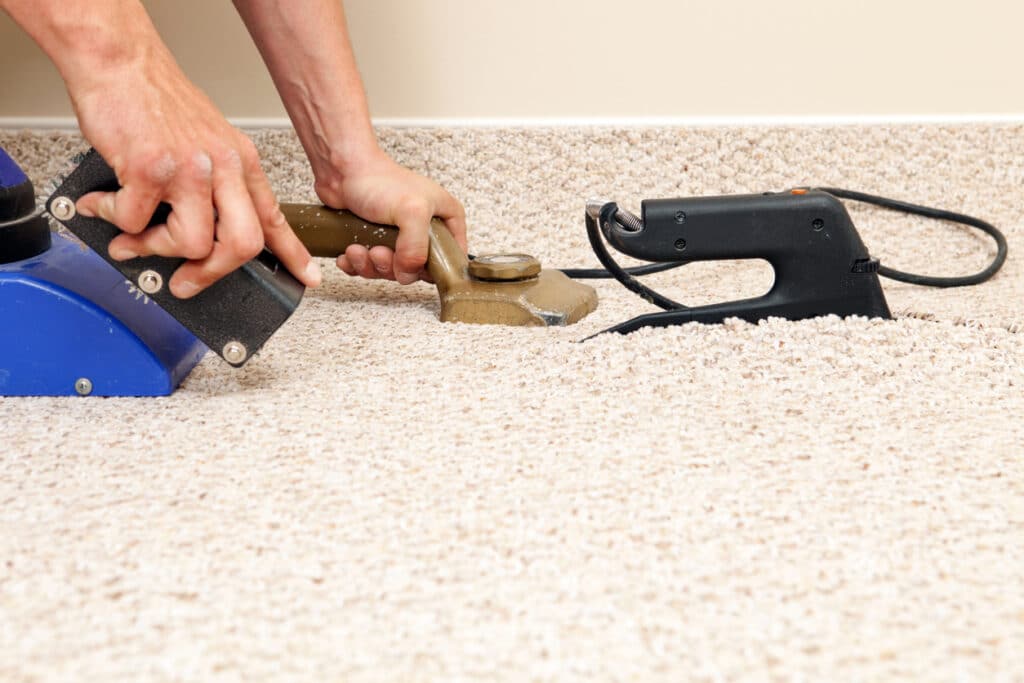
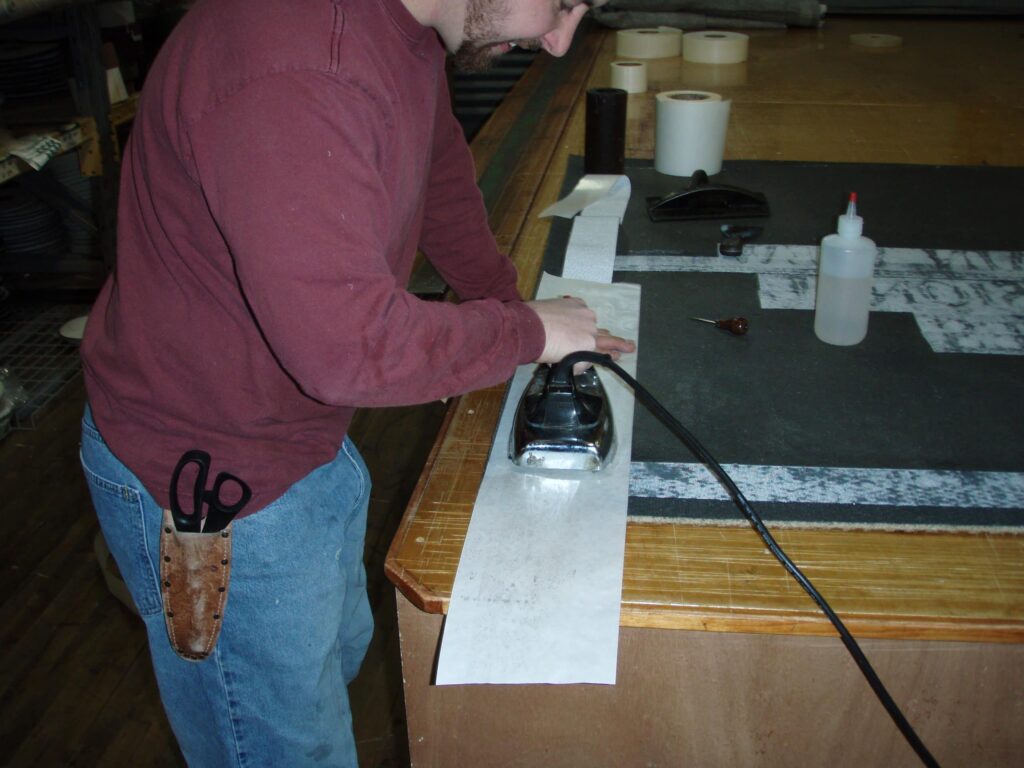
Preheat your seaming iron and lift one edge of the carpet.
Place the iron on the seam tape until the adhesive begins to melt and bead.
Slowly press the carpet edges down over the melted glue while moving the iron forward along the seam.
Ensure the backings of both carpet pieces meet tightly for a clean, strong seam.
Step 4: Secure and Finish the Seam
Use a carpet tractor or a weighted roller to press the adhesive into the carpet backing.
Work along the entire seam until it is fully bonded.
Allow the glue to cool completely before stretching or moving the carpet.
Smooth the seam with your hands and trim any stray fibers for a polished finish.
For best visual results, run seams in the direction of the main light source in the room to help hide them.
Step 5: Have the Right Tools on Hand
Proper carpet seaming is all about preparation and the right equipment. Bond Products carries everything you need to connect carpet seams like a pro, including:
Following these steps will help you create carpet seams that are strong, durable, and nearly invisible. Whether you’re a first-time DIYer or a seasoned installer, with the right tools and patience you can make your carpet installation a success.
Call 1-888-800-BOND with any questions or for help selecting the right tools for your project. Our expert customer service team is always happy to assist!
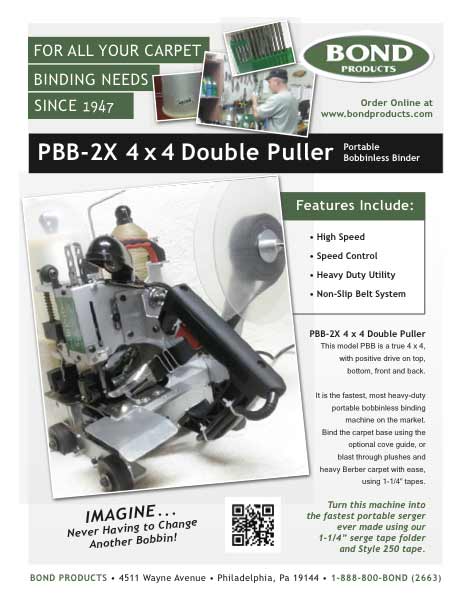
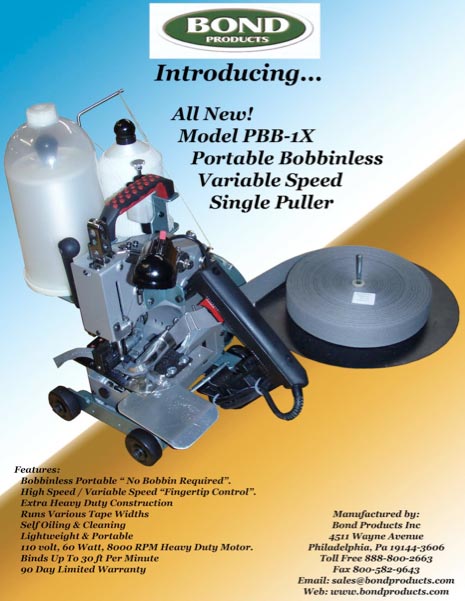
When selecting the right carpet binding machine for your business, understanding the difference between a single puller and double puller carpet binder is essential. The type of carpet work you do—commercial or residential—will determine which option will deliver the best results.
What Is a Puller on a Carpet Binder?
A puller is the feed mechanism on a carpet binding machine that grips and moves the carpet through the machine while the binding tape is sewn to the edge.
Single puller machines use one feed wheel or roller to move the carpet forward.
Double puller machines have two sets of feed wheels, giving them stronger traction and smoother, more consistent movement, especially on thick or heavy carpets.
The puller is critical for keeping the carpet feeding straight and square so your stitches stay even and professional-looking.
When to Use a Single Puller Carpet Binder
For most commercial carpet projects, a single puller binder is all you need. These machines are perfect for:
Lightweight or low-pile commercial carpet
Carpet base finishing
Standard binding jobs (covers 90% of tasks)
If you occasionally work with thicker materials, you can pre-bevel the carpet edges to help the single puller feed more smoothly.
When a Double Puller Carpet Binder Makes Sense
If you primarily handle residential plush or heavy Berber rugs (40–50 oz and up), a double puller carpet binder is the better investment. Double pullers provide:
Stronger feeding power for dense or high-pile carpet
Better tracking and straighter stitches
Smoother handling on thick or textured rugs
For the best results, pair a double puller with 1¼” binding tape, which wraps further around the carpet edge. This allows the stitches to sit deeper in the pile and away from the edge, improving durability.
Single vs. Double Puller Carpet Binders
Here’s a quick rule of thumb to help you decide:
Commercial work → A single puller handles most projects efficiently.
Residential or thick rugs → A double puller keeps your work square and makes binding easier.
By understanding what a puller does and choosing the right setup for your type of work, you’ll achieve professional results, avoid fabric feeding issues, and increase efficiency in your rug binding projects.
Happy Binding! With the right carpet binder, your projects will look professional, last longer, and be easier to produce. If you’re still unsure whether a single or double puller carpet binder is right for your needs, our team is here to help.
Call us at 1-888-800-BOND with any questions or for expert guidance on choosing the perfect machine. At Bond, great customer service is our specialty, and we’ll make sure you get exactly what you need to succeed.
On the eve of America’s birthday, let’s talk about America’s carpet history which is complex and interesting. You may be surprised to learn that an important part of it began right here in Philadelphia.
The plush, wall-to-wall, easy-care carpeting that most of us take for granted is actually a recent phenomenon in history. Worldwide, few people today have this type of carpet in their homes. They are much more likely to have hard floors of some type – either wood, stone, tile, or cement – with area rugs scattered about for warmth, comfort, and aesthetic value. This type of rug has always been relatively easy to clean without a power vacuum by taking it out and beating regularly to remove dirt and dust.
The Early Threads: 18th and 19th Centuries
America’s love of the more luxurious type of carpet dates back to 1791 when William Sprague opened his woven carpet mill in Philadelphia. This marked the inception of domestic carpet manufacturing, which expanded throughout New England in the early 1800s. By 1834, there were 20 carpet mills producing approximately 1 million square yards annually. This number grew to 116 mills by 1850, reflecting the industry’s rapid growth.
A significant milestone occurred in 1839 when Erastus Bigelow invented the power loom for weaving carpets. This innovation doubled carpet production within a year and tripled it by 1850, revolutionizing the industry and making carpets more accessible to the American public.
Industrial Expansion and Innovation
The late 19th and early 20th centuries saw further advancements in America’s carpet history. In 1878 the Shuttleworth brothers started the Mohawk carpet company in Amsterdam, New York with 14 looms imported from England. In 1905 Mohawk introduced a new carpet, the Karnak Wilton, which achieved popularity almost overnight. The company had to expand into new quarters just to meet demand.
Another notable figure was Catherine Evans Whitener, who, in the late 19th century, revived the craft of tufting in Dalton, Georgia. Her handmade bedspreads led to a cottage industry that evolved into mechanized carpet production, positioning Dalton as the “Carpet Capital of the World.”
The Rise of Tufted Carpets and Synthetic Fibers
In the 1920s Oriental rugs began to be manufactured by machine. This was the brainchild of Marshall Field. At this time in American history, the most popular rug material still, by far, was wool.
However, in the 1950s, after World War II had ended and with the help of new fiber technologies, carpet at home was transformed. Everything in carpet production had changed. There were new man-made fibers, spinning techniques, dye equipment, tufting equipment, and printing processes. Not only that, suddenly there was demand. This was the era of tract housing, and all of the ranch houses being built for the Baby Boomers and their parents needed flooring. Wall-to-wall carpeting eventually became the solution of choice.
This was the 1950s and everything “scientific” was the rage. The last thing any modern housewife wanted on her floor was Grandma’s rag rug or even a loom-made Oriental. Nylon had been created in a lab and had been scarce during the war years, but technology and Southern manufacturing (with its lower union-free labor costs) made it affordable to even young, working class families. So they had it installed.
In the mid-1950s, Dupont developed bulk continuous filament (BCF) nylon and this facilitated the introduction of the more inexpensive low pile looped carpet suitable for the working class family’s budget and lifestyle. Nylon also lent itself to a variety of styles and constructions that allowed for more options in interior design. With the explosion of consumer goods, personal style was now an achievable goal.
These developments made carpets more affordable and durable, catering to the needs of the growing middle class. By the 1960s, carpet sales had reached $1 billion annually. Dalton, Georgia, became the epicenter of this growth, with over 150 carpet plants operating in the area. Today, more than 90% of functional carpet produced in the world is made within a 65-mile radius of Dalton.
Bond Products experienced this carpet transformation firsthand. Our products have made it possible for both new and old types of carpet to be installed or adapted elegantly and easily, and we’ve always been excited to see how flooring changes and is modified to suit more modern lifestyles.
America’s Carpet Industry Today
In the 21st century, America’s carpet industry continues to thrive, adapting to changing consumer preferences and environmental considerations. The industry also focuses on sustainability, with efforts to recycle carpet materials and reduce environmental impact.
America’s carpet history reflects a journey of innovation, resilience, and adaptability. From the first woven carpets in Philadelphia to the global dominance of Dalton’s tufted carpets, the industry has continually evolved to meet the needs of consumers. As it moves forward, the American carpet industry remains a testament to the nation’s entrepreneurial spirit and commitment to quality craftsmanship.
However, one challenge of having an excess of exposed hard floor is that it can be a bit bland looking. Adding an area rug, or two or three, solves both problems at once.
Why a Nice Area Rug Matters
A well-chosen area rug can transform any room, adding warmth, style, and comfort. Whether you’re updating your living space or starting fresh, selecting the right rug involves considering several key factors.
Area rugs are more than just decorative pieces; they serve multiple functional purposes:
Comfort Underfoot: They provide a soft surface to walk, play on, or otherwise relax.
Sound Absorption: Area rugs help reduce noise levels by absorbing sound, creating a quieter environment.
Floor Protection: Rugs shield floors from scratches, spills, and daily wear.
Space Definition: They also visually separate areas in open-concept spaces.
Aesthetic Enhancement: Rugs add color, texture, and pattern, as well as tying room elements together.
When choosing the right size for an area rug, it’s important to ensure balance and harmony within the space. In the living room, select a rug large enough to fit under all major furniture pieces or at least under the front legs of sofas and chairs. For the dining room, the rug should extend at least 24 inches beyond the edge of the table on all sides, giving ample room for chairs to slide in and out. In the bedroom, an 8×10 rug works well for a queen-size bed, while a king-size bed typically pairs best with a 9×12 rug.
Selecting the color and pattern of your area rug is just as important as the size. Neutral tones offer flexibility and a calming presence, blending easily with most color palettes. Bold patterns can act as a statement piece, creating a focal point in the room. To tie everything together, use color coordination, selecting rug colors that echo shades found in your furniture, artwork, or accessories for a cohesive, well-designed look.
However, your first consideration has to be: Is this a carpet you love? If you don’t love it, why would you buy it? A carefully considered rug purchase is an investment in comfort and beauty, so don’t bother browsing rugs you don’t like, even if they are practical or fashionable. There are any number of different types of carpets or rugs: shag or high-pile carpets, antique rugs, flat-weave carpets, and rugs woven from fibers like jute or hemp. Take some time in a carpet store or with a professional designer. Explore your options, and then take use into consideration because…
There is no point in putting an antique rug in a toddler’s bedroom or under the dining room table if your beagles have claimed that space already. High-pile rugs are not made for places with lots of traffic, unless you want to see how dirty carpet can get. Consider how the room your carpet will be in functions, and work with, instead of against that purpose.
Material Matters
Different materials offer varying textures, durability, and maintenance needs:
Wool rugs are durable and soft, ideal for high-traffic areas.
Cotton fiber is lightweight and easy to clean. It’s best suited for casual spaces.
Synthetic fibers are stain-resistant and budget-friendly, as well as great for areas with kids and pets.
Natural fibers like jute and sisal are eco-friendly with a unique texture, but best suited for low-moisture areas.
Area Rug Maintenance Tips
Finally, determine how you will take care of your rug. Will vacuuming be enough? Will you be able to clean it yourself or does it need professional cleaning on a regular basis? If you can’t afford to keep your area rug or carpet clean, you should look at other possibilities. Don’t be like the shopper who wants to be a size 8 but is really a size 12. Never wearing a dress you love isn’t a good outcome, nor is being unhappy living with a carpet you can’t afford to take care of.
Enjoy The Process
These tips will help guide you to a good carpet choice. Don’t rush through this process, though. It should be enjoyable for you to weigh your options and then finally select the perfect area rug or carpet for your hard floor. Just don’t forget to add a non-slip backing to your rug to keep it in place and stop accidents from happening. Bond Products has different kinds of rug backing to accommodate any carpet or rug need, and as we say, “Every hard floor needs a nice area rug!”
When it comes to installing artificial turf, the right seaming solution can make all the difference in both time and cost. Bond Turf Seam Tape revolutionized the way turf is joined together, making installations faster, cleaner, and more efficient than ever before.
Save Time and Labor Costs with Bond Turf Seam Tape
One of the biggest advantages of using Bond Turf Seam Tape is the significant reduction in labor time, resulting in major cost savings for contractors and DIYers alike. Traditional seaming methods can take up to 15 minutes per linear yard, including mixing, setup, and application. In contrast, Bond Turf Tape can be applied in less than 5 minutes per linear yard—a 66% time savings.
Since labor is often the largest expense in any artificial turf installation or repair, switching to Bond Turf Seam Tape can help you finish more projects in less time. Imagine seaming an entire field in one-third the time. That means more jobs completed, more revenue, and happier customers.
How to Use Bond Turf Tape
Say goodbye to messy two-part epoxies and long curing times. Bond Turf Seam Tape is designed for easy, clean application:
Enjoy a fast, strong, and reliable bond even in outdoor environments.
Bond Turf Tape is compatible with all urethane-backed artificial turf systems and sets up in just 10-15 minutes, depending on weather conditions. This quick setup means installers can keep moving without worrying about seams shifting during the installation process.
Superior Strength for Demanding Applications
With a tensile strength of 385 psi and a yield strength of 400 psi, Bond Turf Tape creates one of the strongest seams on the market. It’s tough enough to withstand repeated pounding from 350-pound football players, heavy foot traffic, and the wear and tear of playgrounds or high-use areas.
Top Applications for Turf Tape
Bond Turf Tape has been tested and proven in some incredibly rigorous seaming applications. Here are some that we think best represent the strength and durability of this incredible product.
Putting Greens
More a matter of long-term durability, putting greens are a great application for artificial turf and turf seaming tape. They require absolute precision, daily performance, and complete reliability as they serve as the competitive surface for one of our country’s favorite pastimes. Bond Turf Seam Tape ensures seamless joins that won’t disrupt play, and it’s trusted by facilities across the country.
Playgrounds
Kids are tough on everything, and playgrounds are no exception. The full-out excitement and energy they bring to everything they do lead to seemingly constant breakdown and failure of shoes, bikes, and playthings. So it shouldn’t be surprising to see playgrounds make our list of most appropriate seaming applications. As more and more schools and municipalities install artificial turf surfaces in their playground facilities, the need for a 110% reliable and permanent seam is critical.
Considering the consequences of a failed seam and the injuries that could result, we are proud of the way our high-temperature adhesive temperature tape has performed. We have the utmost confidence in the strength of our seams and the resulting safety that a playground application demands.
NFL Stadiums
NFL football is the ideal place to substitute with artificial turf. With 350 pound linemen digging in the trenches at the line of scrimmage and hard running fullbacks making split second cuts, natural grass is quickly shredded, giving way and requiring constant upkeep.
Artificial turf does a much better job of holding up under this ultimate test of human endurance, but there are still vulnerabilities – every 5 yards. The seams between the conjoined turf must be the strongest points on the field of play, otherwise teams risk injury to multimillion dollar top-caliber athletes.
We’re proud to say that Bond Products Turf Tape is now used in a number of NFL Stadiums and counting, including in Cincinnati, Baltimore and the Pittsburgh practice facility. With years of proven durability under the most stressful of circumstances, we’ve never had a failure. That makes NFL Stadiums our most rigorous application, hands down.
Choosing the Right Turf Seam Tape
Bond Turf Tape is designed to work with standard polypropylene-backed artificial turf and can be used with felt-backed turf as well. It’s high-temperature resistant so it won’t release under the heat of the sun. (Tip: Always test on your specific application, as polyester backings may be more heat-sensitive and could delaminate or warp.)
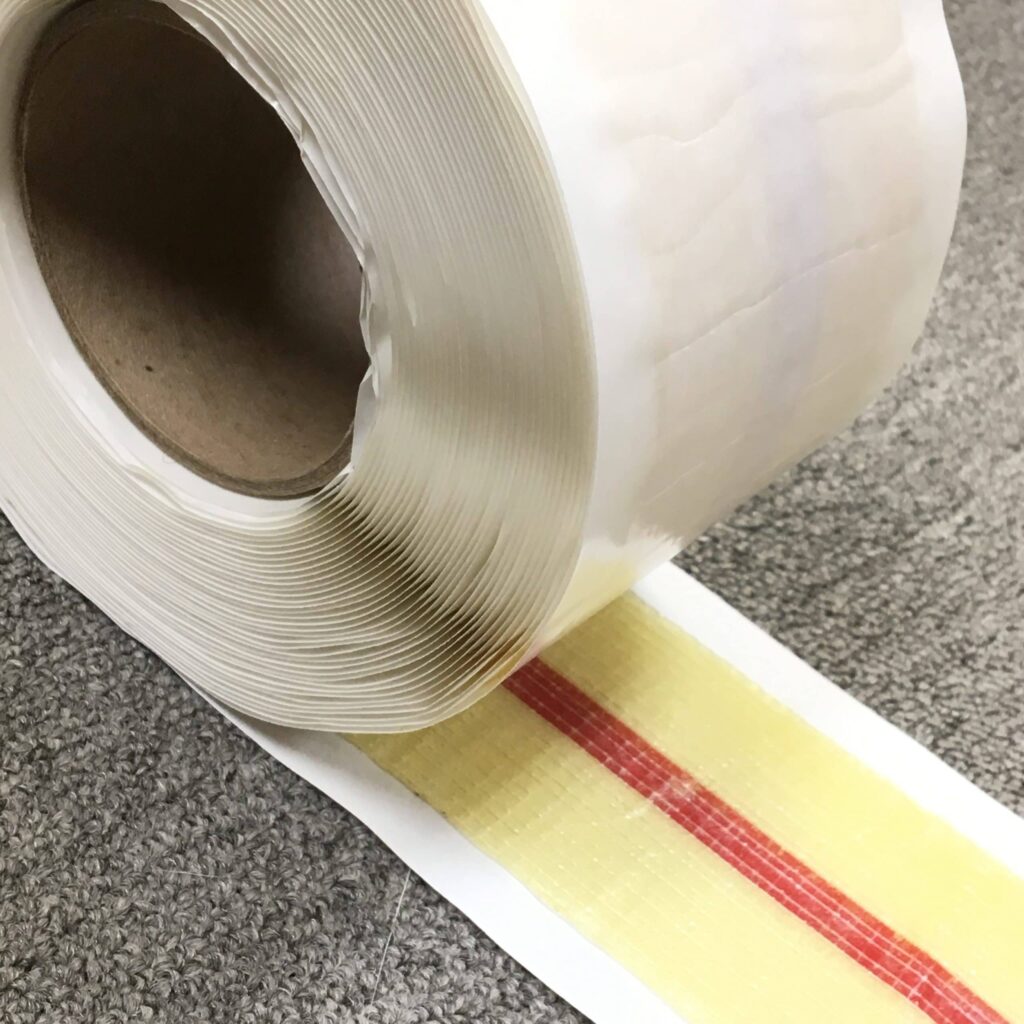
We recommend using our 3″ Bond Hi-Temp Turf Back Seam Tape (50 ft. roll) – now with fiberglass reinforcement for extra strength and easier handling.
FAQs About Turf Seam Tape
Q: How does Bond Turf Seam Tape save time compared to traditional seaming methods?
A: Bond Turf Seam Tape is pre-loaded with adhesive and heat-activated with a turf iron. This eliminates mixing and extended cure times, reducing installation time by up to 66%.
Q: Is Bond Turf Seam Tape strong enough for high-traffic areas? A: Yes! With a tensile strength of 385 psi, it’s designed to handle everything from putting greens to NFL stadiums.
Q: What tools do I need to apply Bond Turf Seam Tape? A: You’ll need a high-temperature turf iron to activate the adhesive and a seam sled to press the turf into place.
Q: Where can I buy Bond Turf Seam Tape? A: Use our website for easy ordering and fast shipping, or call our customer service department for assistance.
Q: Is Bond Turf Seam Tape safe for outdoor use? A: Absolutely. It’s designed for outdoor conditions and won’t release in hot, sunny environments.
Experience the Benefits of Bond Turf Seam Tape
Forget about sticky messes, caustic fumes, and extended cure times. Bond Turf Seam Tape offers a clean, quick, and highly durable solution for seaming artificial turf in any environment.
Ready to experience the difference? Call us today at 888-800-BOND for expert advice, a sample, or to place your order. Let us help you transform your artificial turf installation into a seamless success!
If you’re updating your RV’s carpet or just replacing a worn section of carpet in your recreational vehicle, you’ve probably run into a very common problem—what to do with the raw carpet edge. That’s where carpet binding comes in. Whether it’s a slide-out section, an engine cover (also called a doghouse), or just a small high-traffic spot near the door, binding your carpet gives it a clean, finished look that lasts. And the good news? You’ve got options for your RV carpet binding. From DIY-friendly products like Instabind to professional binding services, it’s easier than ever to get polished results without a full flooring overhaul.
What Is Carpet Binding in an RV?
Carpet binding is a process that finishes off the cut edge of carpet so it doesn’t fray or fall apart over time. Think of it like hemming the edge of fabric. It not only keeps the carpet from unraveling, but also makes it look neat and intentional – perfect for those tricky spots in RVs where the carpet doesn’t run wall to wall.
Common Carpet Binding Spots in RVs
Slide-Out Sections
If your RV has slide-outs, you know the carpet in those areas can take a beating. Many times, the edge of the slide-out carpet overlaps the main floor. Instead of leaving it raw, you can bind that edge so it holds up better over time and looks cleaner.
Engine Cover or “Doghouse”
This part usually has curved or odd shapes, which makes cutting and finishing it a bit more complicated. A flexible binding material like Instabind is a great choice here, especially if you’re doing it yourself.
If you’re not up for hauling your carpet to a shop or hiring someone to professionally bind your carpet? No problem. Instabind is a carpet binding tape that’s easy to apply at home. It mimics the look of traditional machine binding but doesn’t require any sewing.
Just cut, peel, stick, wrap, and glue, and your carpet is ready to go.
Works great for curved shapes like engine covers or steps
Saves money
If you’ve got leftover carpet from your RV or a custom-cut piece you want to finish, Instabind is one of the easiest ways to turn a carpet remnant into a rug.
Prefer to Have It Done Professionally?
You can also take your carpet piece to your local carpet shop and have them cut and bind it for you. This is a great option if you want the job done quickly and don’t want to mess with cutting tools or glue. If you are in the Philadelphia area, Bond Products would be happy to bind your rug for you.
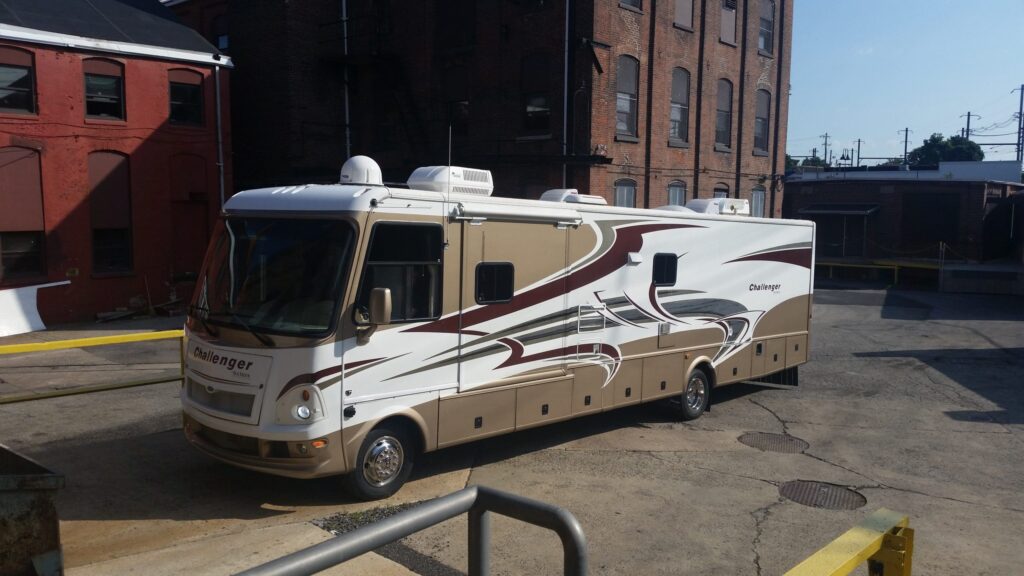
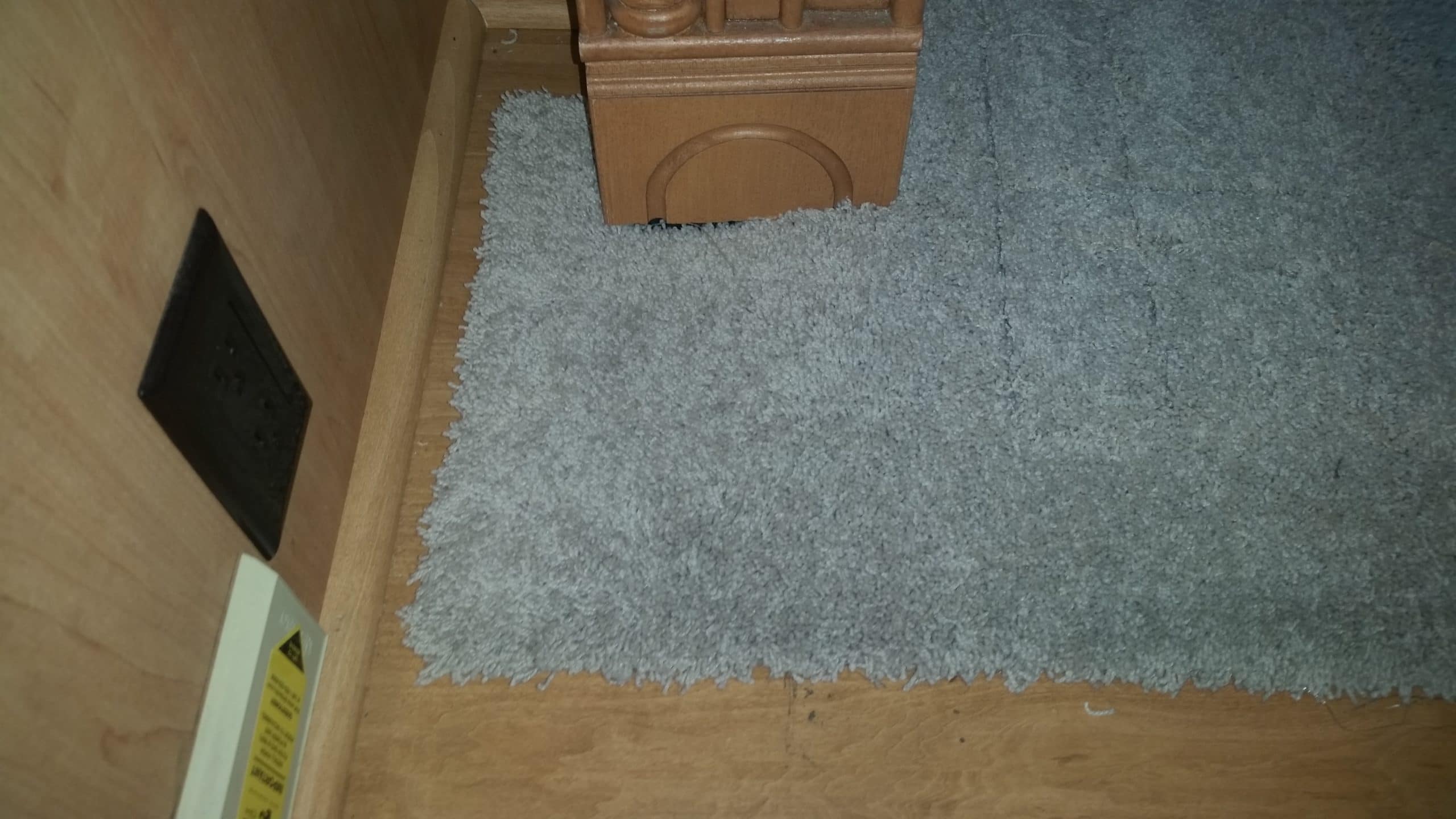
Here’s the work we did for a customer who came in with a restored RV but with raw carpet edges on his slid outs:
We removed the old carpet, bound the new, and seamed it where needed, and made one happy camper’s day!
Pro tip: Always ask what the binding will cost. Prices can range widely, so make sure to determine the cost upfront to see if it matches your budget.
Tips for Binding RV Carpet
Use your old carpet as a pattern – It’ll help with odd shapes like around slide-outs or steps.
Match your colors carefully – You want the binding to blend in or complement your RV’s interior.
Don’t skip securing the edges – Whether you’re gluing or stapling, make sure it’s fastened well so it holds up over time.
Be patient with curves – Flexible binding like Instabind makes it easier, but curves can still be tricky. Go slow!
RV Carpet Binding FAQs
Q: Can I bind my RV carpet myself? Yes! Instabind is perfect for DIYers and doesn’t require a binding machine. It’s strong, flexible, and easy to use.
Q: Do I have to bind all the edges in my RV? Not necessarily. But for any visible or high-traffic edge – like in a slide-out or near the door – binding really helps with durability and appearance.
Q: How much does professional carpet binding cost? Usually between $1–$4 per foot, depending on the material and your local shop. It’s best to call ahead and get a quote.
Q: What if my carpet has curves or odd shapes? That’s where Instabind really shines. It wraps easily around curves and corners without bunching or fraying.
Q: Where can I get Instabind? You can order it directly from Bond Products. We offer a wide variety of colors and styles, including options that look like traditional serging or fringing.
Don’t Forget the Finishing Touch!
If you’re replacing or customizing carpet in your RV, don’t forget the finishing touch, a clean, bound edge. It will help your carpet last longer, look better, and keep it from unraveling over time.
Whether you choose a DIY solution like Instabind or get your carpet finished by a professional, carpet binding is a small step that makes a big difference. And at Bond Products, we’ve got everything you need to get the job done right. If you have questions, give us a call at 1-888-800-BOND. We’re happy to help!
Even the highest-quality rugs eventually show signs of wear. While frayed edges and worn binding are common problems, tears, holes, or worn spots in the middle of a rug can be even more frustrating. These issues make a rug unsafe to walk on, cause further unraveling, and can ruin its appearance. The good news? Fixing a tear in a rug is absolutely possible with the right approach and tools.
Whether you’re dealing with a rip in the backing, a weakened area from foot traffic, or a tear from moving furniture, reinforcing the rug from the inside out can add years to its life.
Here’s how to repair damaged or worn areas in the interior of your rug.
Interior Rug Repairs: A How-To Guide
1. Start from the Backing
Interior rug repairs are most successful when addressed from the back side first.
Flip the rug over to expose the backing.
Examine the torn or weak area carefully to see how far the damage extends.
If the rug backing is frayed or separating, Bond #943 Flexible Seam Tape is your best solution.
How to Use #943 Flexible Seam Tape:
Cut a piece of tape slightly larger than the damaged area.
Place the tape adhesive-side down on the rug backing.
Using a hot flat iron, press the tape firmly to bond it to the backing.
This creates a strong, flexible reinforcement that prevents the tear from spreading and stabilizes the area for long-term use.
2. Reinforce the Entire Rug
If your rug has multiple weak spots or is thinning across a high-traffic area, consider reinforcing the entire backing for maximum durability.
This method not only stabilizes problem areas but also strengthens the rug overall, preventing new tears from forming.
A reinforced rug backing makes the surface safer, more stable, and more resistant to everyday wear.
3. Inspect the Front and Blend the Repair
After stabilizing the rug from the back, check the surface of the repair:
Smooth out fibers with your hands to help blend the area.
For decorative rugs with pile loss or missing fibers, consider tuft repair or filling the gap with fibers matched to your rug. (For major aesthetic repairs, a professional finisher may be needed.)
4. Don’t Forget About Frayed Edges
While repairing the interior of your rug will keep it stable and safe, frayed edges can quickly make a rug look worn again. Bond Products has everything you need to refresh and protect rug edges, including:
These solutions not only improve the appearance of your rug but also reinforce the edges to prevent future unraveling.
5. Protect Your Repair for Years to Come
Once your interior repair and any edge binding are complete:
Rotate your rug periodically to distribute traffic evenly.
Use a quality rug pad to reduce friction and add cushioning.
Check your rug every few months to catch small issues early.
Extend the Life of Your Rugs
Rips and worn spots in the middle of your rug don’t mean it’s time to throw it out. In fact, fixing a tear in a rug has never been easier. With Bond #943 Flexible Seam Tape, secondary backing materials, and Instabind® edge solutions, you can stabilize, repair, and protect your rugs for many more years of use.
Not sure which repair method or product is right for your rug? Call 1-888-800-BOND for expert guidance. Our team specializes in helping DIYers and professionals keep their rugs looking beautiful.
What are the best carpet options for finishing stairs? What a great question! We get calls from customers asking the same and wondering about the benefits of using carpeting on stairs. Although there’s no one best solution for this type of carpeting issue, here are some of our ideas.
Solutions for Finishing Stairs with Carpet
When it comes to finishing stairs with carpet, there are several carpet options to choose from, each offering a different aesthetic and level of protection for your steps. Whether you want a traditional look with a bound runner or a fully carpeted staircase for added comfort and safety, Bond Products has the solutions and materials to help you achieve the perfect finish.
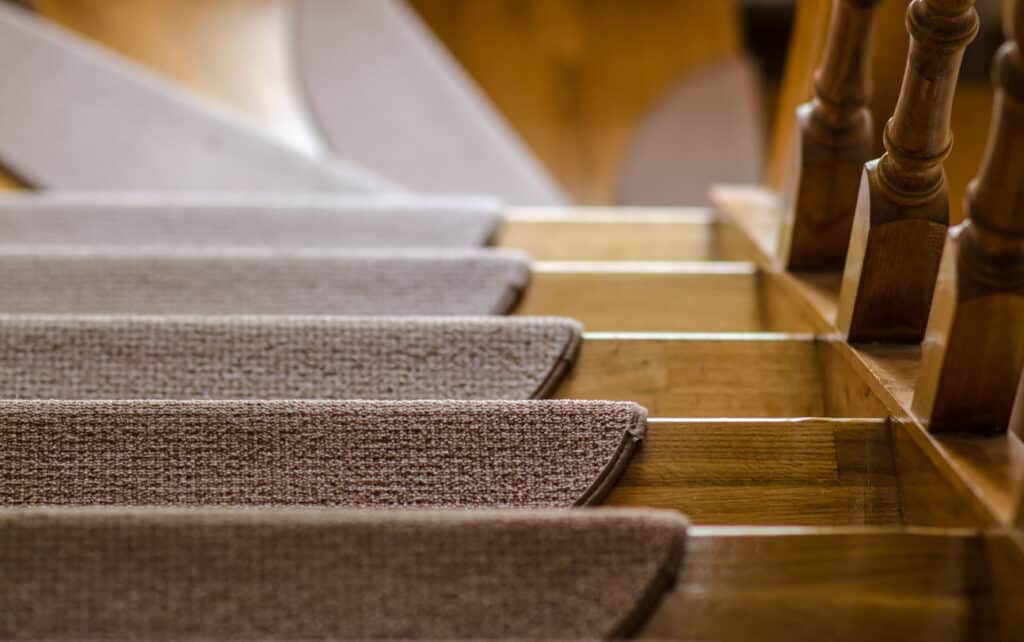
Carpet runners are one of the most popular solutions for finishing stairs because they provide a perfect blend of protection, noise reduction, and aesthetic appeal. Runners pre-made off the rolls are usually three feet wide and will fit nicely down any flight of steps. They are usually pre-bound or serged on the long edges right off the rolls and can be purchased by the foot from most retailers. The only requirement is to finish the cut ends. The other option is using your left over carpeting and cutting it to size and then binding the edges. This is the best and easiest solution and they can be stapled into place (fitted) leaving a nice tight finish that preserves the steps and creates a nice quiet step.
Here’s how you can turn leftover carpet into a stair runner:
Measure and Cut: Determine the ideal width and length for your stairs, ensuring each tread has the right amount of coverage.
Bind the Edges: Use Instabind carpet binding tape or have the edges professionally bound to prevent fraying and give a polished look.
Secure to Stairs: The finished runner can be stapled or attached using a carpet gripper system, ensuring a tight, secure fit that enhances both safety and aesthetics.
Stair Treads: A Flexible Alternative
For those who want the benefits of carpet on their stairs without covering the entire surface, stair treads offer a good alternative. These are individual pieces of carpet that cover only the tread portion of each step. Stair treads provide slip resistance while maintaining the natural look of wooden stairs. They are easier to install and replace compared to full stair runners, and they’re available in various colors, materials, and patterns to match different home styles.
Stair treads are are easily cut to size using left over carpeting and bound, or there are some nice options in braided treads that look and wear very well. They are secured with double-sided carpet tape, adhesive strips, or small nails/staples to keep them in place without damaging the flooring beneath.
Edge-to-Edge Carpeting for Stairs
Edge-to-edge carpeting is a way to completely hide the stair tread and takes a lot of initial cutting to fit around the rail poles. This option provides the most cushioning and sound absorption, making it a popular choice for homes with children, pets, or high-traffic areas. Professional installation is recommended for this type of carpeting, as it requires precise measuring, cutting, and securing to ensure a seamless fit. It’s becoming a more outdated look as most folks prefer to show off the natural wood edges.
Bare or Painted Steps
Bare or painted steps tend to be noisy and slippery and will require refinishing in a short period of time.
Choosing the Carpet Options for Finishing Stairs
Regardless of which stair carpeting option you choose, finishing the carpet’s edges is necessary for both durability and aesthetics. Bond Products offers high-quality carpet binding tapes, serging yarns, and binding equipment to help you achieve a polished and long-lasting finish. Call us at (888) 800-BOND for any assistance you may need.
There are many craft and thrift blogs that give tutorials with pictures for someone looking to learn how to bind a carpet or make an area rug from a remnant or a larger piece of carpet. But people bind carpets for all kinds of reasons besides learning a new craft or saving money. Here are some examples of carpet problems, challenges, or opportunities that require binding or serging to complete:
Carpets with damage – Do you have a piece of beautiful wall-to-wall carpet that you love but that has, unfortunately, become damaged in a way that can’t be easily repaired? Making that piece into one or more area rugs is a way to avoid sending something lovely to the landfill while keeping it in a different form for your house or business. Damaged area rugs can also be fixed by removing the stained and worn parts and rebinding as well. A carpet accident does not have to be a tragedy.
Redecorating – Back in the mid-20th century, the trend was to throw out area rugs and introduce wall-to-wall carpeting. This was made possible by new chemistry, cleaning products, and push vacuums. For the past couple of decades, the grandchildren of those people who tossed out area rugs have been prying up carpet and praying that what is underneath it is hardwood. Everything old is new again. If you’re ready to retro your house to hardwood, remember our motto: “Every hard floor needs a nice area rug.”
Unique carpet options – While there are quite a lot of excellent pre-made carpeting and area rug choices for consumers to make, if you are interested in a unique or one-of-a-kind flooring, the “quilted” area rug is something to consider. This involves choosing carpeting remnants or samples and sewing them together to make a piece of flooring art. Like quilt making it can be time intensive and require the right tools, but your finished product will be something everyone will notice and comment on.
Gorgeous rug, bad binding – Sometimes bad things happen to good carpets and rugs. If you find a high quality rug at a flea market or antique shop but hate the way it’s bound or want a new look for it, Bond Products can help. People frequently underestimate the effect a professional binding can make on a rug.
There are so many ways that carpets and rugs can be tailored to meet the needs of individual taste or space. If you have a carpet idea or problem, give Bond Products a call. We’d love to help you find your solution.
There are many different types of beautiful carpets. We’ve talked previously about practical carpets, craft carpets, and antique rugs, and we’ve explored what makes them different in both use and value. Over time, carpet artisans have refined their craft to the point where rugs are not just functional—they are true works of art. One example of this is the Aubusson carpet. But what exactly is an Aubusson carpet, and why is it considered such a treasure?
Aubusson Carpets and French Nobility
In addition to carpet enthusiasts, readers of history, design, and literature about wealthy households may recognize the name. Aubusson carpets were once the preferred floor coverings of the French nobility and, later, the very wealthy. Before the French Revolution, France operated under a strict social hierarchy where status was defined by privilege. In 1627, the Hospice de la Savonnerie was established by royal order to produce knotted pile carpets for the kings and queens of France. These carpets were used in royal residences and often given as diplomatic gifts.
The Origins of Aubusson Weaving
Naturally, carpets reserved for royalty became highly prized. Members of the French nobility wanted similar quality for their own homes, which led to the establishment of workshops in the villages of Aubusson and Felletin. Aubusson was already known for its detailed pictorial tapestries, often depicting landscapes or hunting scenes. These were woven as wall hangings and displayed as fine art in elite residences.
The region’s weaving tradition has a long and complex history. Some legends trace its origins to the Saracens who remained in the area after the Battle of Tours. Later, skilled Huguenot weavers settled in Aubusson while fleeing religious persecution. Many of them were eventually forced into exile after the revocation of the Edict of Nantes. As a result, the carpet trade in France rose and fell depending on political and religious conditions at the time.
What Makes an Aubusson Carpet Unique?
Many Aubusson carpets were created using a pileless tapestry technique, which is why the term “Aubusson carpet” often refers to flatwoven rugs. However, some pile carpets were also produced. Early designs were influenced by Oriental rugs, but over time the style evolved. Weavers began incorporating more floral patterns, scrolling vines, and architectural motifs, similar to those seen in Savonnerie carpets.
Aubusson Carpets Today
Today, the Aubusson style continues to influence rug production around the world. Weavers in countries such as India, Pakistan, and China produce rugs inspired by this classic European design. These rugs often feature the same elegant floral and architectural elements rooted in the Renaissance period. Unlike many other handwoven styles, Aubusson carpets reflect a distinctly French artistic tradition.
Caring for an Aubusson Carpet
If you own an Aubusson carpet, you have more than just a floor covering. You have a piece of history and a work of art. With proper care, it can remain a beautiful and valuable part of your home for years to come.
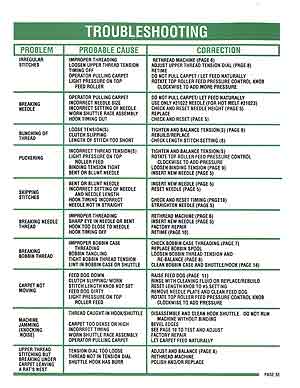
One common issue with portable carpet binders is they can go out of time and start skipping stitches. Portable binder timing issues are frustrating and can be due to many factors. Here we will explain the cause and effect that creates each type of timing issue and give possible remedies. We also have a video describing this along with our PBL manual (download it free on our new website).
Binder Timing Issues: Troubleshooting
The following is our basic troubleshooting guide listed on page 38 of our PBL manual:
Please note we repair most makes and models of carpet binding equipment and will consider trade-ins toward a new binder when you are ready to upgrade!
Always feel free to contact us if you have any questions about your carpet binding needs.
At Bond Products, we’ve been manufacturing and selling our no-mess, no-fume, high-temperature adhesive artificial turf seaming tape for almost two decades. During that time, our Turf Tape has proven its reliability in several NFL stadiums – in our opinion one of the most strenuous and extreme seam environments on the planet! These are:
Our Turf Tape has also been used to seam and secure artificial turf in playgrounds, residential and commercial landscaping and golf practice facilities around the country.
After years of continued development and feedback from our customers, we believe the key benefits to using our easy-to-use adhesive seaming tape include:
Clean, simple installation process – no sticky mess, no ruined uniforms.
Odor-free bonding process – no caustic smell, no chemical fumes.
Efficient, green process – no two-part epoxy mix and the associated waste, no disposal of toxic byproducts.
Lightweight, compact deployment – minimal shipping charges and storage requirements
Significant labor cost savings
Because the glue is actually adhered to the back side of the tape and applied using a special high-temperature iron, there is absolutely nothing to mix or handle. This means no sticky mess to dry out your hands or stain and ruin uniforms. The entire process is clean and simple. In addition, because there are no chemicals to activate, there is minimal to no odor (which is especially helpful for indoor applications).
The self-contained nature of the product makes it one of the greenest solutions on the market. There is no by-product, no leftover waste that will end up in a landfill and pollute the environment.
Bond Turf Tape is lightweight and compact, making it inexpensive to ship and easy to transport to and from each job site. It requires minimal storage space in the warehouse and on the work trucks, allowing more room for other equipment and supplies.
Probably the single most appealing benefit of our revolutionary turf seaming product is the reduction in labor, which results in significant cost savings. Whereas traditional seaming methods can take up to 15 minutes per linear yard or more (including mixing, set time and application), our tape can be applied at a rate of less than 5 minutes per linear yard. That’s a 66% savings in the amount of time it takes to do the job.
Considering the fact that labor is generally the highest cost on an artificial turf installation or repair, it’s easy to see how Bond Turf Seaming Tape pays for itself exponentially. Imagine seaming an entire field in ⅓ the time – that means an installer can complete 3 projects in the same amount of time.
The tape itself sets up immediately and is completely cured in a matter of 10-15 minutes, depending on the environment. This quick set allows installers to move steadily without fear of shifting completed seams as they work their way across the field.
With a tensile strength of 385 psi and a yield strength of 400 psi, Bond Products Turf Tape creates one of the strongest seams on the market. Able to withstand the repeated pounding and pressure of 350 pound football linemen, our product continues to perform and hold, regardless of the conditions and/or wear and tear of its environment.
If you’re tired of the sticky mess, caustic odor, and hazardous waste associated with traditional turf seaming products, please take a minute to pick up the phone and call 800-888-BOND to learn more about our incredible turf seaming tape. We’d be happy to answer any questions and even send you a sample so you can see for yourself how clean, quick and strong our revolutionary seaming process is!