
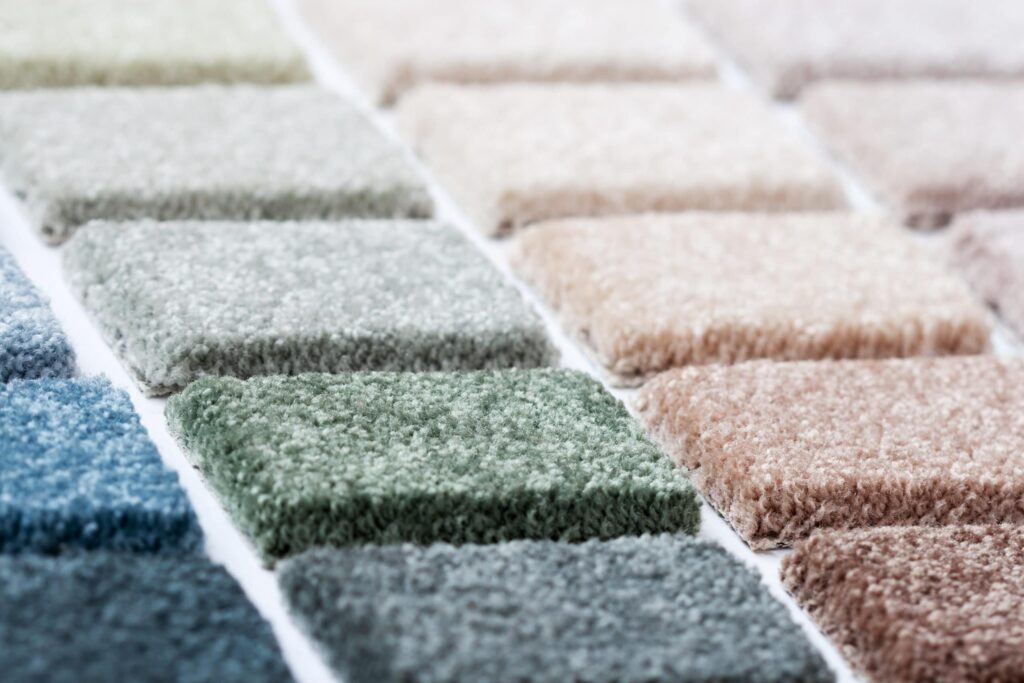
There are many different types of carpet, but nylon dominates the market today. That hasn’t always been true. In 1950, roughly 90 percent of all carpets and rugs were woven, not tufted. Advances in materials science flipped that balance. Today, about 90 percent of carpets are tufted nylon, while woven carpets account for only a small fraction of the market.
So why did nylon take over? The answer has less to do with trends and more to do with chemistry, manufacturing, and durability.
What Is Nylon?
Nylon is a family of synthetic polymers. In simple terms, it’s a plastic made up of long, repeating molecular chains. Scientists can adjust how those chains form and combine with other substances, giving nylon very different properties depending on its use.
Carpet is one of the most common uses, but not the only one. Nylon also shows up in everything from clothing to industrial materials. In flooring, its strength and resilience make it especially useful.
A Brief History of Nylon Carpet
Before nylon, the most important synthetic fiber was rayon. This polymer fiber was invented in the 19th century by the Frenchman, Count Hilaire de Chardonnet, a chemist seeking to create a lower-cost alternative to silk.
True synthetic fibers came later. In the early 1930s, Dr. Wallace Hume Carothers, often called the father of polymer science, developed and patented Nylon 6,6 while working at DuPont. The first consumer product made from it wasn’t carpet at all. It was toothbrush bristles.
Carpet came next. By the mid-1950s, DuPont had developed bulked-continuous filament (BCF) nylon, which made modern tufted carpet possible. At the same time, postwar housing boomed. With new homes going up quickly, families needed finishes that were affordable and durable. Low-pile looped nylon carpet fit that need perfectly.
The rise of wall-to-wall carpet wasn’t driven by nylon alone. New spinning techniques, dye methods, tufting machines, printing processes, and backing materials all emerged around the same time. Together, they reshaped interior design for decades.
How Nylon Carpet Is Made
Nylon begins with crude oil. Processing converts it into chemical intermediates, such as hexamethylenediamine and adipic acid, which combine to form nylon salt.
From there, manufacturers produce nylon as either staple fiber or bulked continuous filament. Carpet mills spin the filament into yarn and tuft it into a backing to create finished carpet.
The fiber’s internal structure matters. Nylon 6,6 has a more compact molecular structure than Nylon 6, making it harder and more resilient. That density helps it resist crushing, dirt, and wear.
Why Nylon Works So Well for Carpet
Nylon 6,6 is especially well-suited for high-traffic areas, whether in homes, offices, or public spaces. It holds its shape under pressure, resists mildew, and doesn’t trigger allergies the way some natural fibers can.
Maintenance is straightforward compared to many alternatives. Nylon may pill over time and can generate static, but it typically lasts long enough to make those issues manageable.
While nylon carpet doesn’t carry the visual prestige of a handwoven Aubusson rug, it excels where durability and ease of care matter most. It’s available in a wide range of styles, from plush cut pile to tightly looped berber, which helps explain its continued popularity.
Using Nylon Carpet Remnants as Rugs
Nylon’s durability also makes it a good candidate for reuse. Larger remnants can be cut down and turned into smaller rugs that hold up well in entryways, basements, garages, or workspaces.
If you have a nylon carpet remnant you’d like to turn into a rug, Bond Products offers Instabind carpet binding tape for finishing edges, along with rug backing that help keep finished pieces in place. Because nylon lasts so long, repurposing remnants often makes more sense than replacing them.
This combination of strength, flexibility, and longevity is ultimately why nylon remains the most common carpet material today.
