
Even the highest-quality rugs eventually show signs of wear. While frayed edges and worn binding are common problems, tears, holes, or worn spots in the middle of a rug can be even more frustrating. These issues make a rug unsafe to walk on, cause further unraveling, and can ruin its appearance. The good news? Fixing a tear in a rug is absolutely possible with the right approach and tools.
Whether you’re dealing with a rip in the backing, a weakened area from foot traffic, or a tear from moving furniture, reinforcing the rug from the inside out can add years to its life.
Here’s how to repair damaged or worn areas in the interior of your rug.

Interior Rug Repairs: A How-To Guide
1. Start from the Backing
Interior rug repairs are most successful when addressed from the back side first.
- Flip the rug over to expose the backing.
- Examine the torn or weak area carefully to see how far the damage extends.
- If the rug backing is frayed or separating, Bond #943 Flexible Seam Tape is your best solution.
How to Use #943 Flexible Seam Tape:
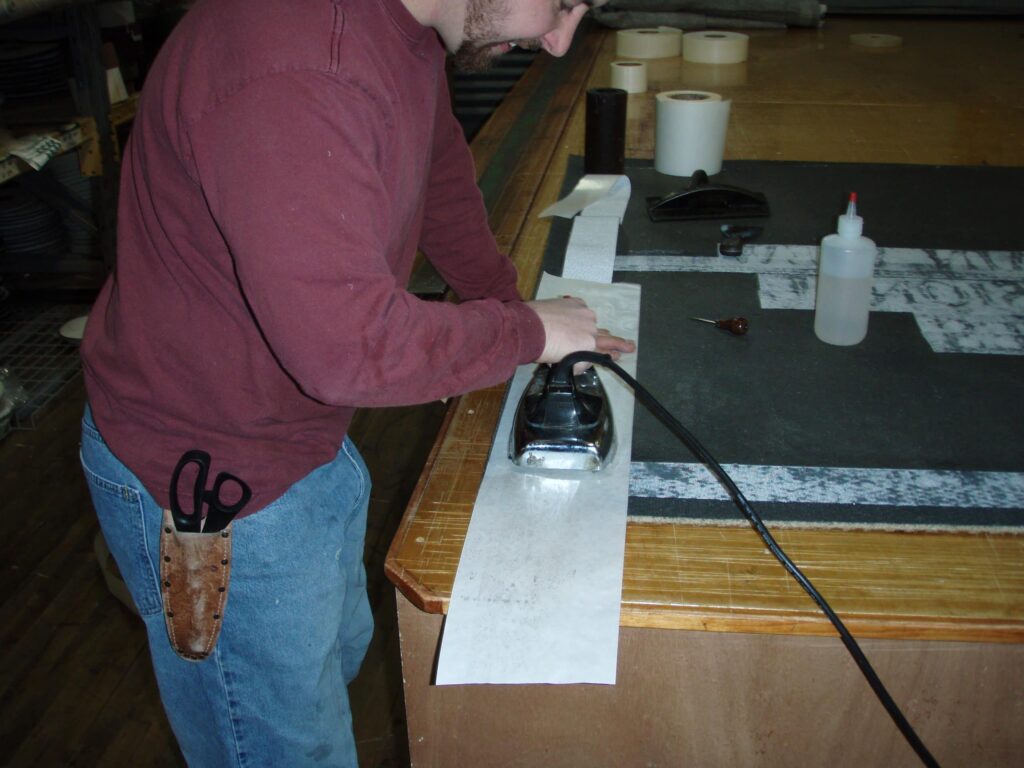
- Cut a piece of tape slightly larger than the damaged area.
- Place the tape adhesive-side down on the rug backing.
- Using a hot flat iron, press the tape firmly to bond it to the backing.
This creates a strong, flexible reinforcement that prevents the tear from spreading and stabilizes the area for long-term use.
2. Reinforce the Entire Rug
If your rug has multiple weak spots or is thinning across a high-traffic area, consider reinforcing the entire backing for maximum durability.
- Apply a secondary non-slip rug backing to the underside.
- Use Bond spray adhesive or latex glue to attach it securely.
- This method not only stabilizes problem areas but also strengthens the rug overall, preventing new tears from forming.
A reinforced rug backing makes the surface safer, more stable, and more resistant to everyday wear.
3. Inspect the Front and Blend the Repair
After stabilizing the rug from the back, check the surface of the repair:
- Smooth out fibers with your hands to help blend the area.
- For decorative rugs with pile loss or missing fibers, consider tuft repair or filling the gap with fibers matched to your rug. (For major aesthetic repairs, a professional finisher may be needed.)
4. Don’t Forget About Frayed Edges
While repairing the interior of your rug will keep it stable and safe, frayed edges can quickly make a rug look worn again. Bond Products has everything you need to refresh and protect rug edges, including:
- Instabind® DIY edge binding tapes for quick and professional-looking repairs
- Traditional binding tapes and fringes for a classic finish
- The new Instabind® fringe product, which lets you add decorative fringe easily without sewing
These solutions not only improve the appearance of your rug but also reinforce the edges to prevent future unraveling.
5. Protect Your Repair for Years to Come
Once your interior repair and any edge binding are complete:
- Rotate your rug periodically to distribute traffic evenly.
- Use a quality rug pad to reduce friction and add cushioning.
- Check your rug every few months to catch small issues early.
Extend the Life of Your Rugs
Rips and worn spots in the middle of your rug don’t mean it’s time to throw it out. In fact, fixing a tear in a rug has never been easier. With Bond #943 Flexible Seam Tape, secondary backing materials, and Instabind® edge solutions, you can stabilize, repair, and protect your rugs for many more years of use.
Not sure which repair method or product is right for your rug? Call 1-888-800-BOND for expert guidance. Our team specializes in helping DIYers and professionals keep their rugs looking beautiful.
