
Carpet and area rugs are a big investment, and protecting them from excess moisture is an important part of long-term care. If humidity builds up in your home—whether from daily living, poor ventilation, or a spill—your carpet can suffer. Here we will walk you through how to get moisture out of carpet and prevent the long-term effects of humidity like mold, rippling, or unpleasant odors.
Why Moisture and Humidity Damage Carpet
Even small amounts of trapped moisture can lead to big problems over time. Here’s what can happen if humidity goes unchecked in your carpet:
- Mold and mildew can grow, especially in natural fiber rugs.
- Musty smells start to settle in, affecting your whole home.
- Dust mites and fleas thrive in humid environments and can worsen allergies.
- Swollen carpet fibers may pull at seams and create a rippled, uneven look.
While synthetic carpets (like nylon carpet) are more resistant to moisture, all carpets can suffer if humidity stays too high.
How to Get Moisture Out of Carpet
Whether you’re dealing with a damp spot from humidity or drying a carpet after a minor spill, here are some effective ways to remove moisture and protect your flooring.
1. Use a Wet Vac for Water Removal
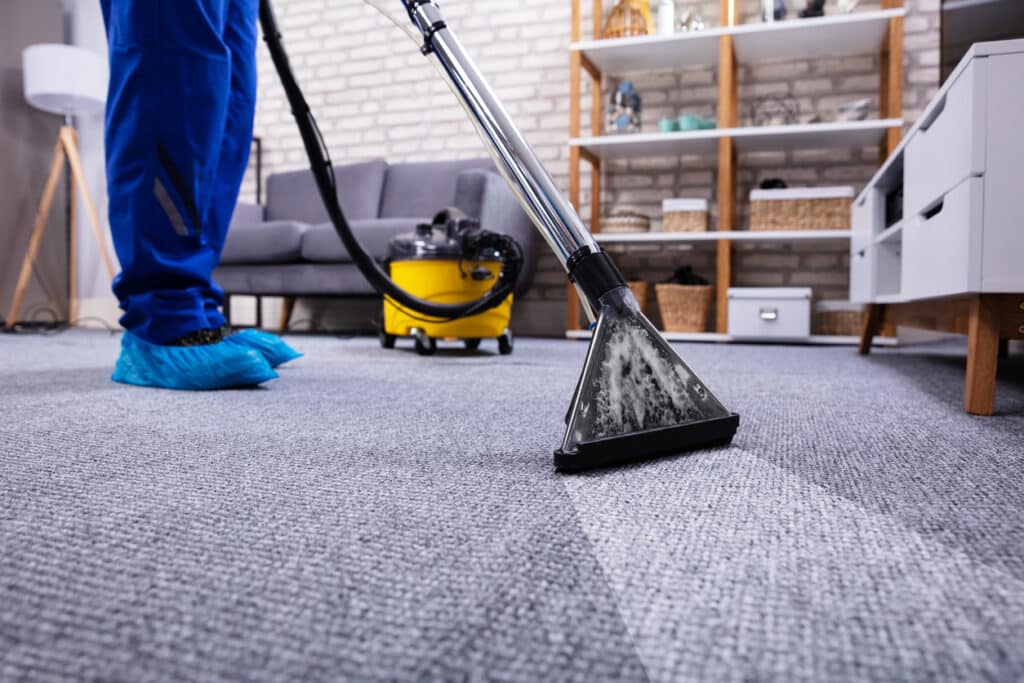
If you’re dealing with a spill, minor flooding, or a high-moisture area, a wet vac is your best friend. It’s designed to pull water directly out of carpet fibers. If you don’t own one, they’re affordable to rent at most hardware stores.
2. Set Up Fans and Airflow
Position a floor fan or box fan to blow across the affected area. You can also turn on ceiling fans or open windows to promote cross-ventilation. Airflow is one of the most efficient ways to dry out carpet and reduce humidity in the air.
3. Try the Baking Soda Trick
Sprinkle a generous amount of baking soda over the damp area and let it sit for 30–60 minutes. Baking soda helps absorb moisture and odors. Vacuum it up thoroughly with a dry vacuum to remove the residue and any lingering dampness.
4. Run a Dehumidifier
For typical humidity, adding a humidifier to any damp areas of the house should work. Set the humidifier at between 40-50% humidity. As anyone who lives in a cool climate and heats their house all winter knows, taking all the humidity out of the air will make it uncomfortably dry. You will feel that dryness in your skin and in your respiratory system. However, if the humidity is higher than that 50% range, the house will feel damp, and it will allow bacteria and mold, among other things, to grow. Keeping the house at that optimal range will make it comfortable for people but not welcoming to molds and critters.
5. For Larger Water Damage, Call a Pro
If you’ve had a major leak or looding from heavy rainfall, don’t wait, contact a water damage restoration expert right away. Carpets and padding may need deep drying, cleaning, or replacement if the water sits too long.
Stay Ahead of Moisture Problems
Getting moisture out of carpet quickly can make the difference between saving your flooring and facing costly repairs. Keep an eye on humidity levels in your home, especially in bathrooms, basements, or any room with limited ventilation.
With regular maintenance, airflow, and the right tools, you can keep your carpets dry, fresh, and mold-free year-round.

Pingback: Why Does My Carpet Feel Damp? - Rewrite The Rules